STILLS ● MOTION
imperium technologies
MAKING PROTOTYPES LOOK PRODUCTION-READY.
Industrial product photography for a startup's patented smart steam traps
/ where engineering meets visual storytelling.

THE BEGINNING: A NEW KIND OF PRODUCT
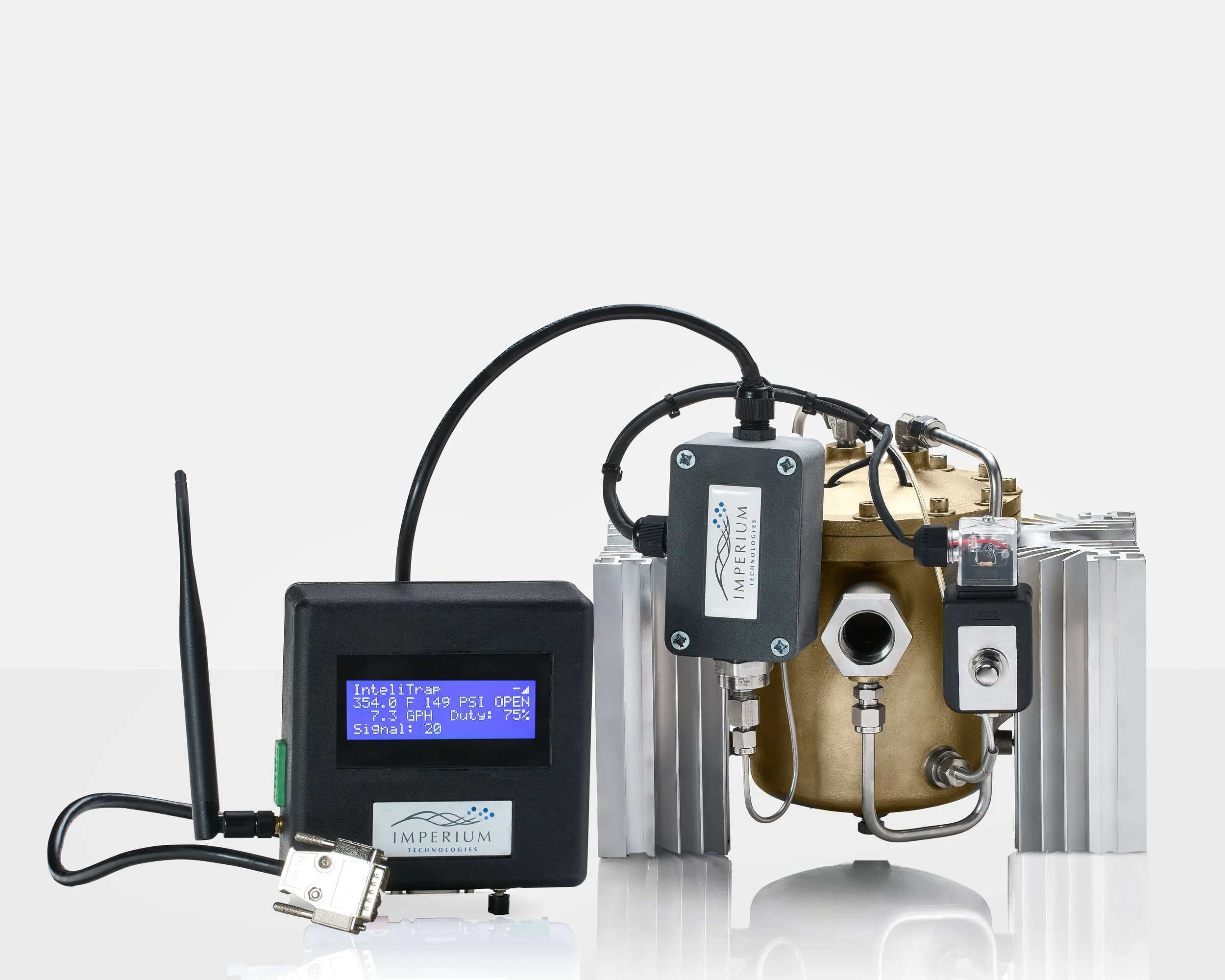
Leah Brown, Marketing & Communications Director at Imperium Technologies, found me online in June 2025. Her company had just secured a patent for their proprietary "InteliTrap" — a smart steam trap that merges mechanical engineering with digital monitoring. They were building out their website and needed product imagery that matched the sophistication of what they'd invented. Two model variations (self-powered and utility-powered), brushed stainless steel housings, integrated electronics, and zero existing visual assets. They needed everything from scratch.
I've always gravitated toward projects that challenge me to learn something new, and industrial technology was exactly that kind of territory. This wasn't skincare or luxury fashion — it was valves, solenoids, and metallic fins. But the fundamentals of great product photography don't change: understand the product, respect the brand, and make it look like it belongs on the shelf (or in this case, the spec sheet) of a company that knows what they're doing.
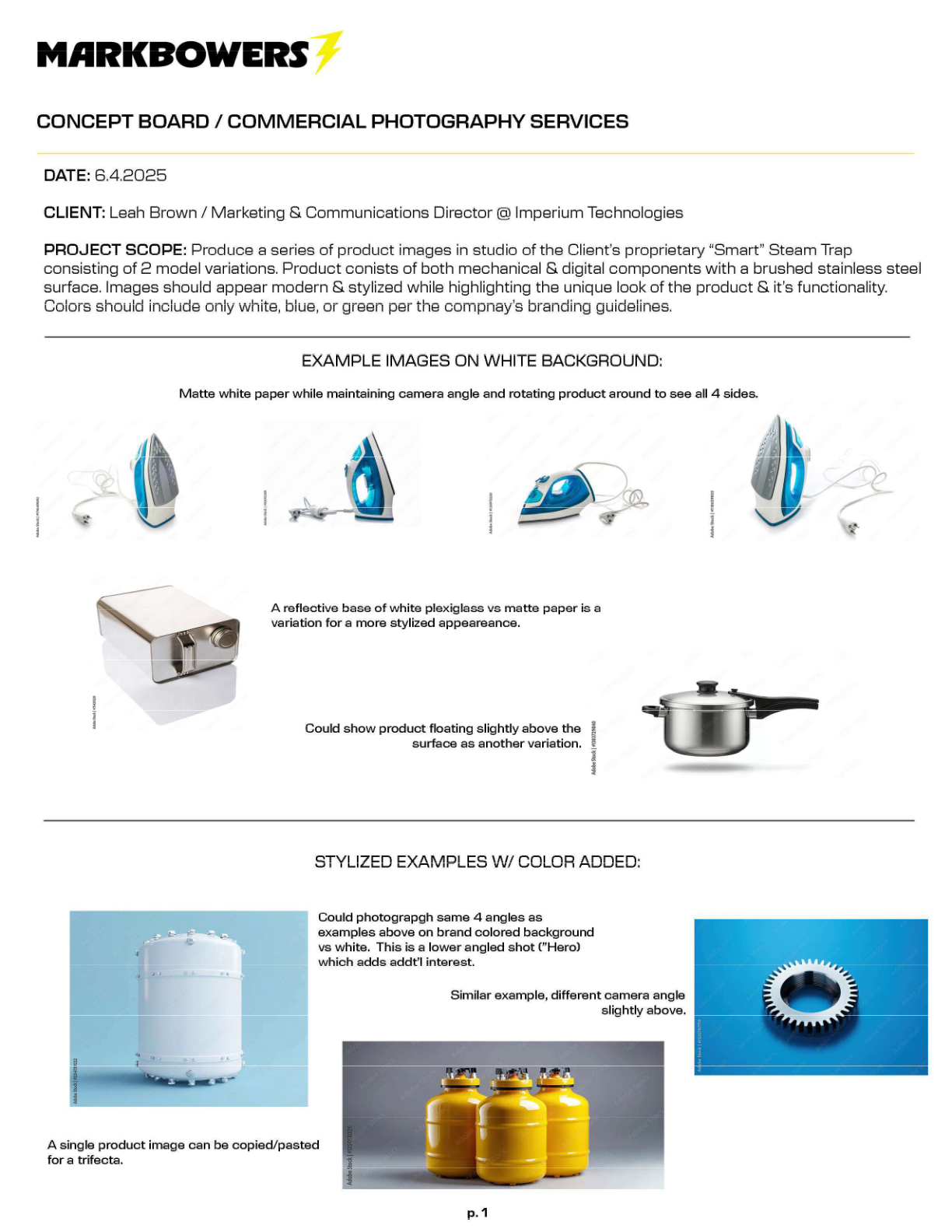
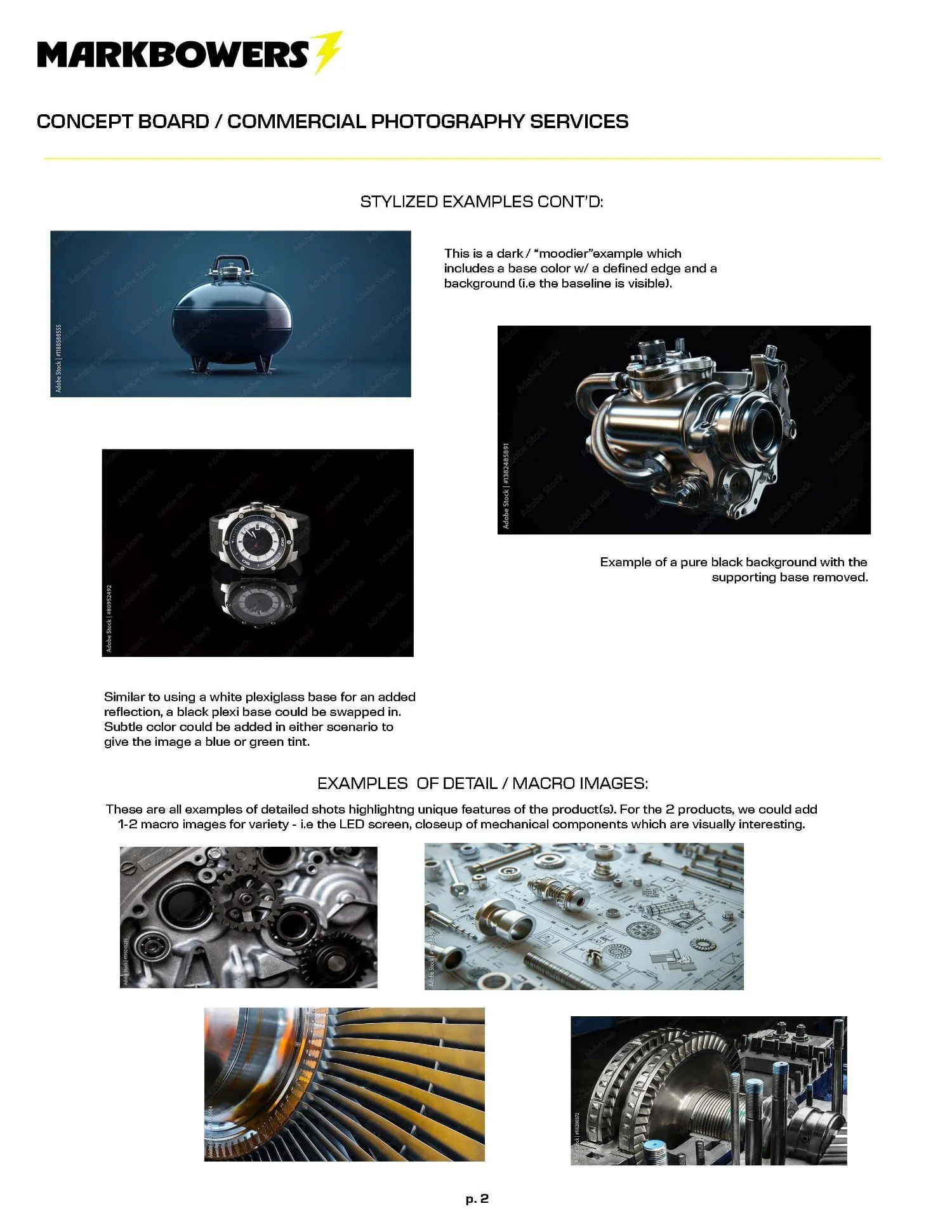
Leah provided brand guidelines restricting colors to white, blue, and green, along with a short brief outlining their needs. From there, I developed an initial estimate and a two-page concept board with visual references for how industrial products could be photographed to feel modern and stylized rather than purely functional.
PRE-PRODUCTION: BUILDING THE VISUAL PLAYBOOK
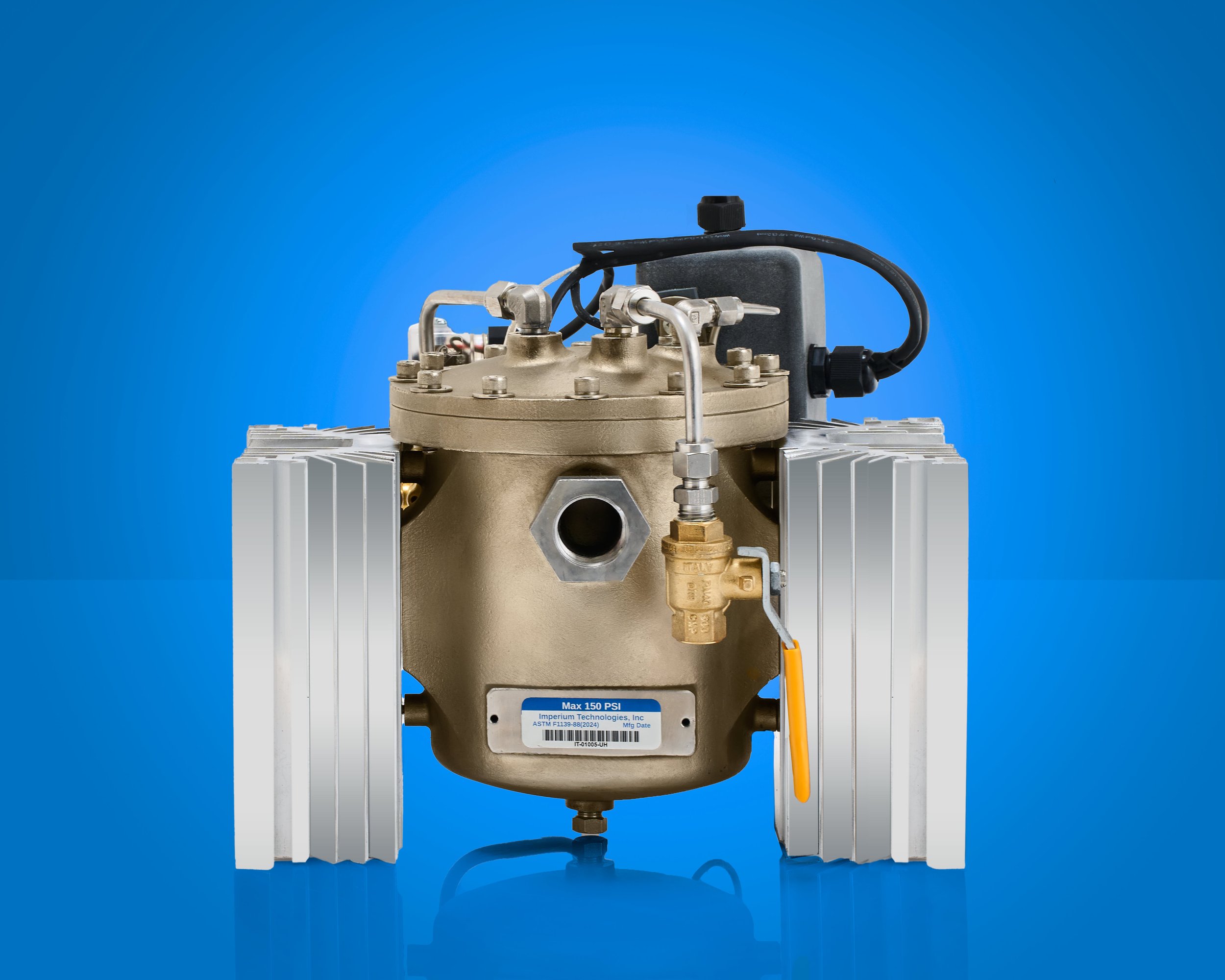
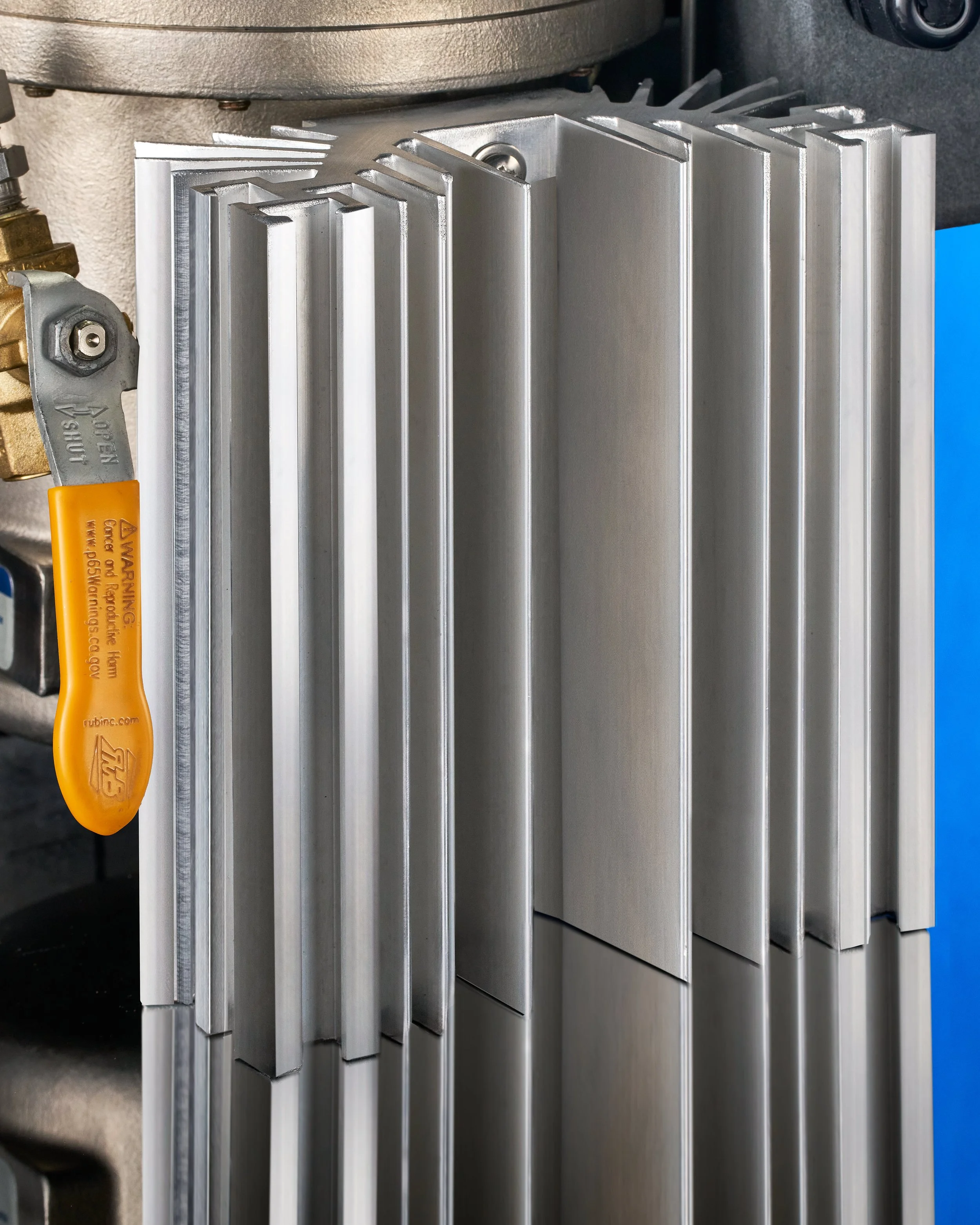
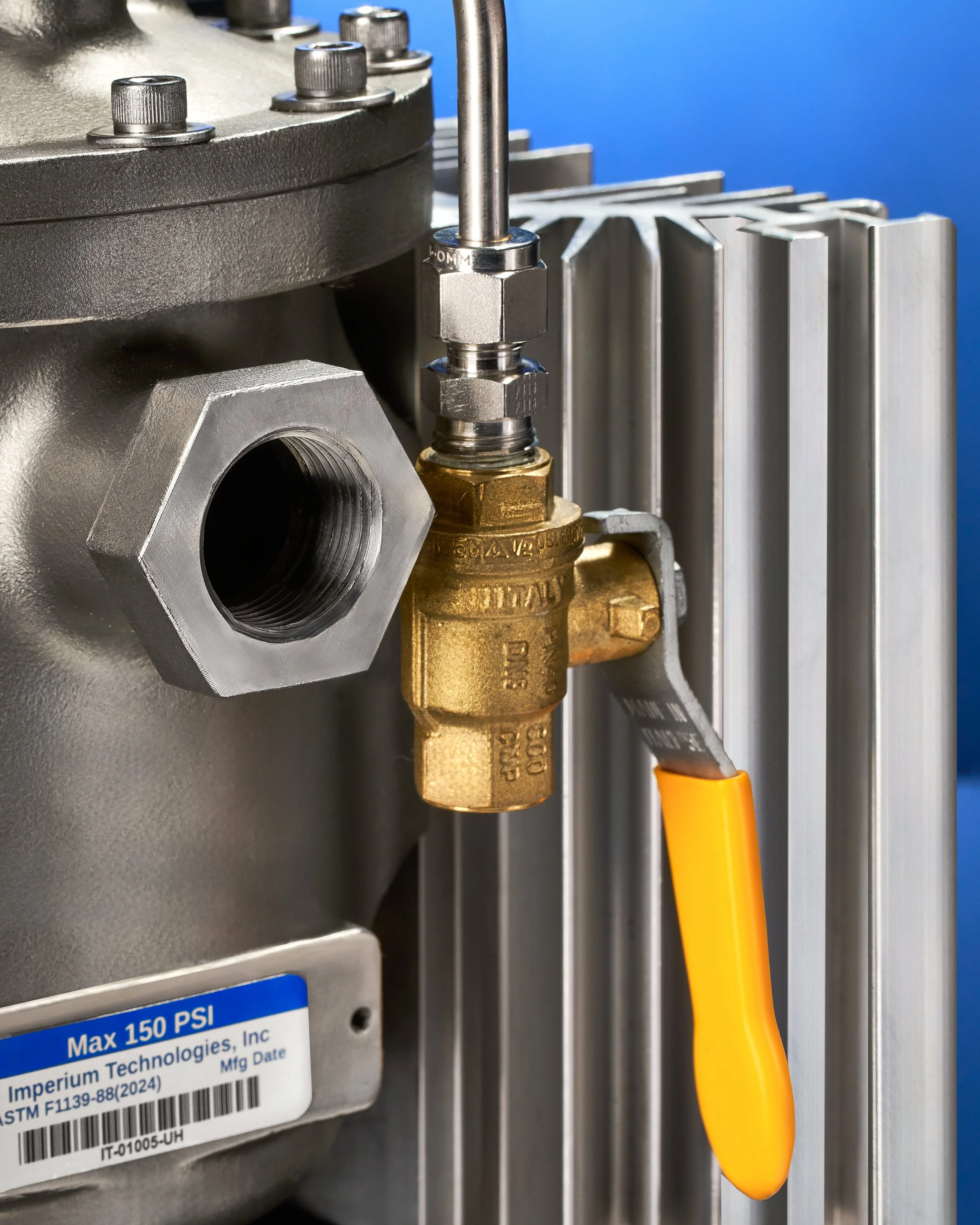
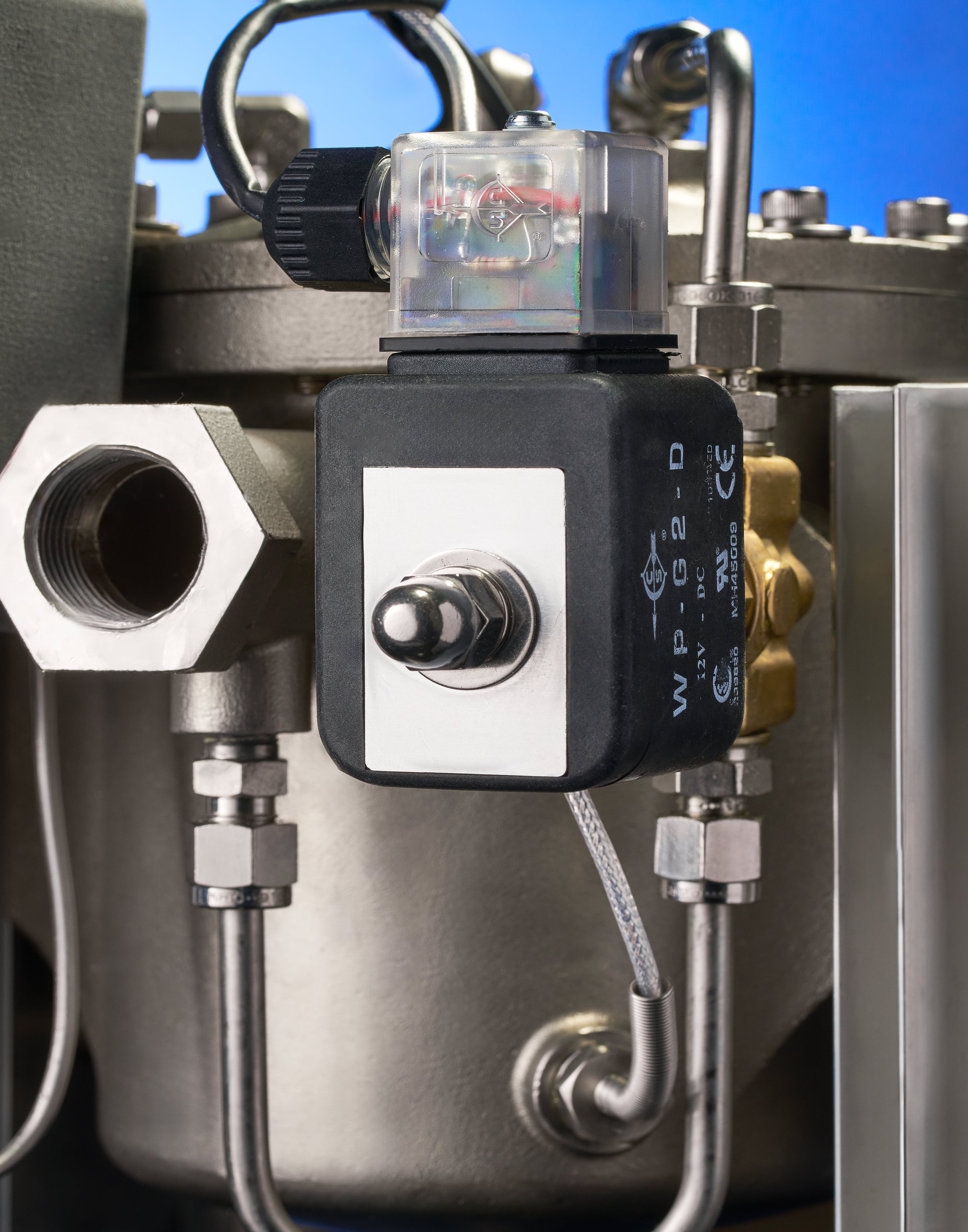
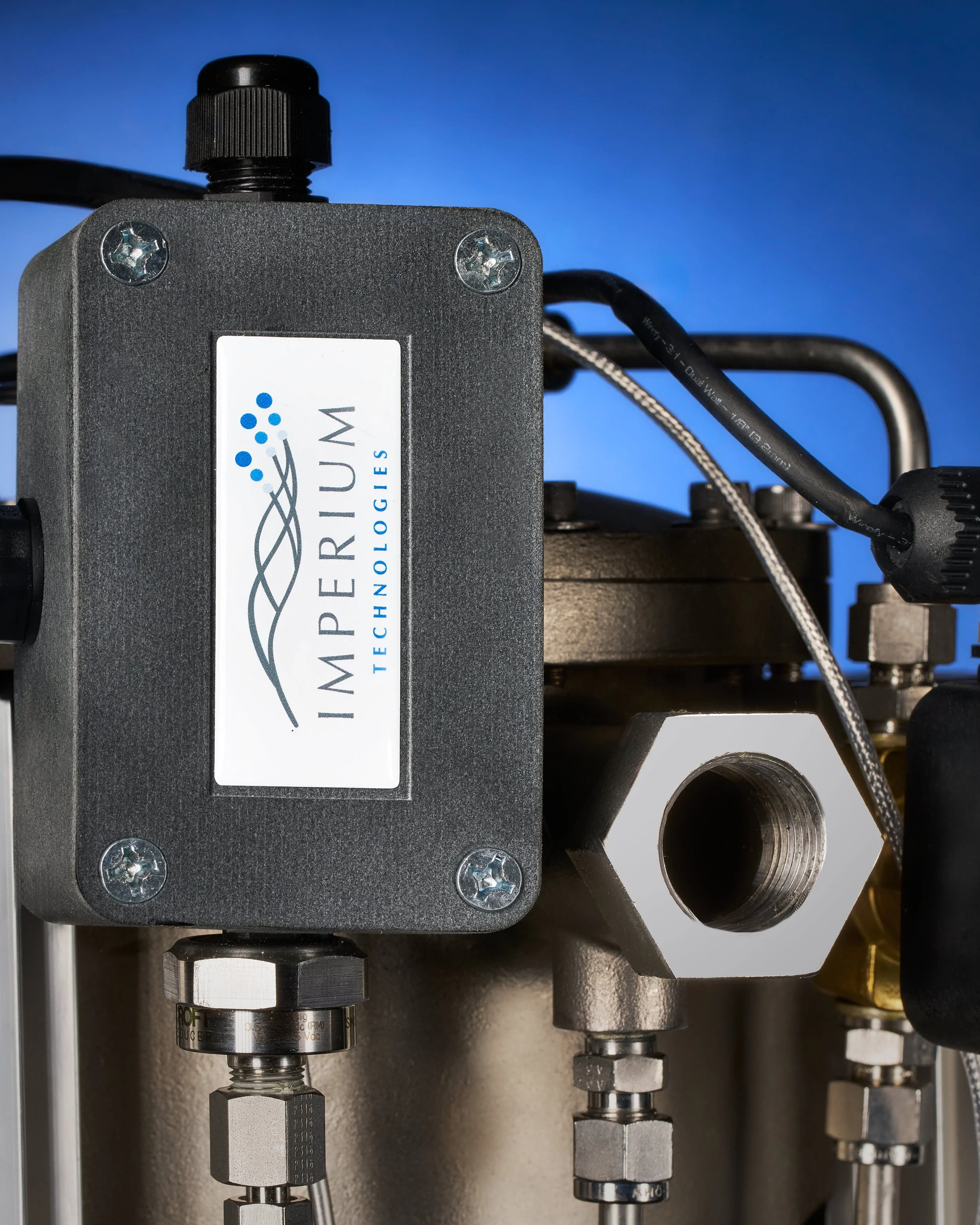
The concept board became the foundation for our creative direction. I proposed several approaches: clean white backgrounds on matte paper for straightforward e-commerce use, white plexiglass bases for added reflection and dimension, and brand-colored backdrops in Imperium's signature blue for hero-style compositions. I also included examples of macro and detail photography — closeups of mechanical components, circuit boards, and textured surfaces — because products like these have visual stories hidden in their engineering.
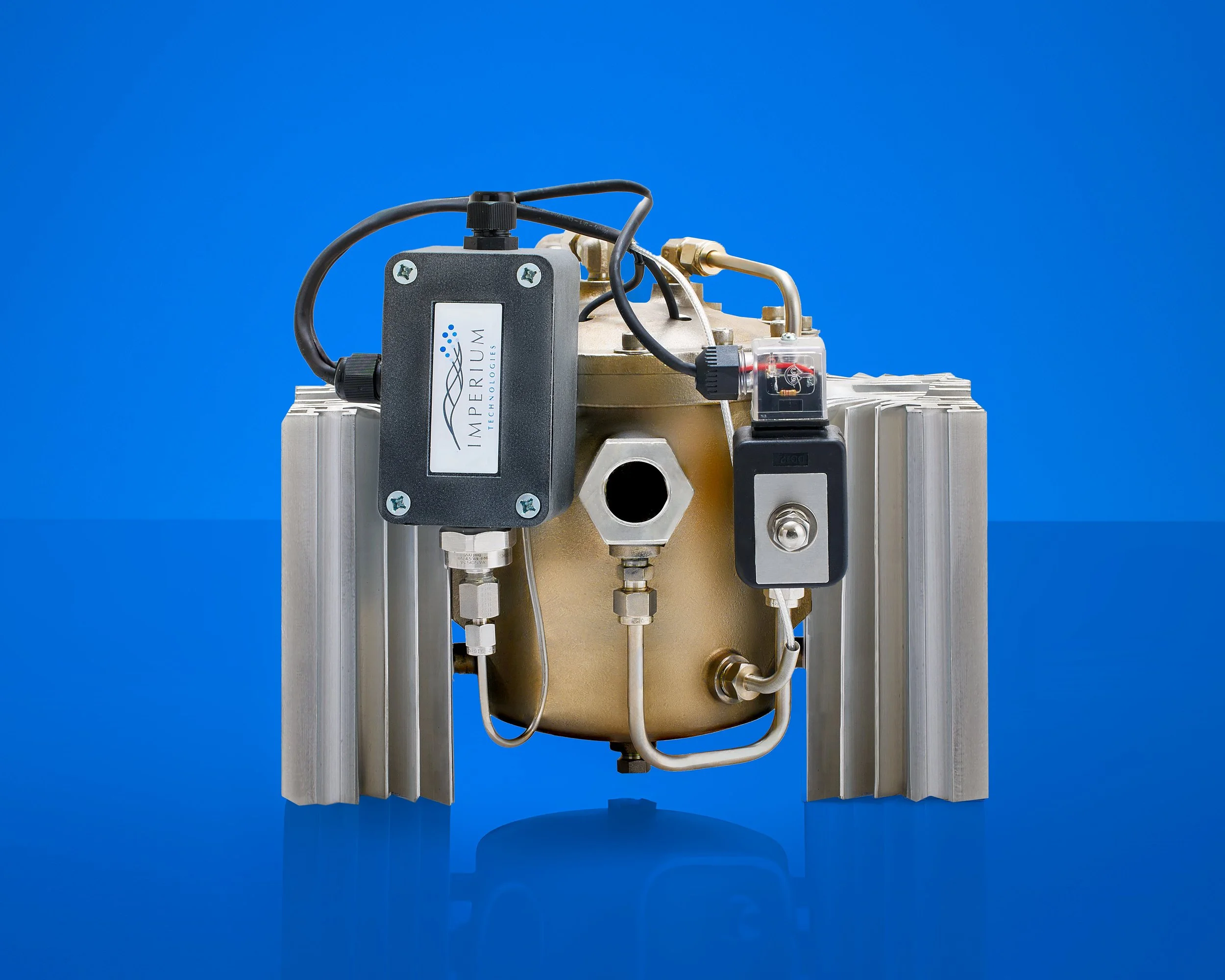
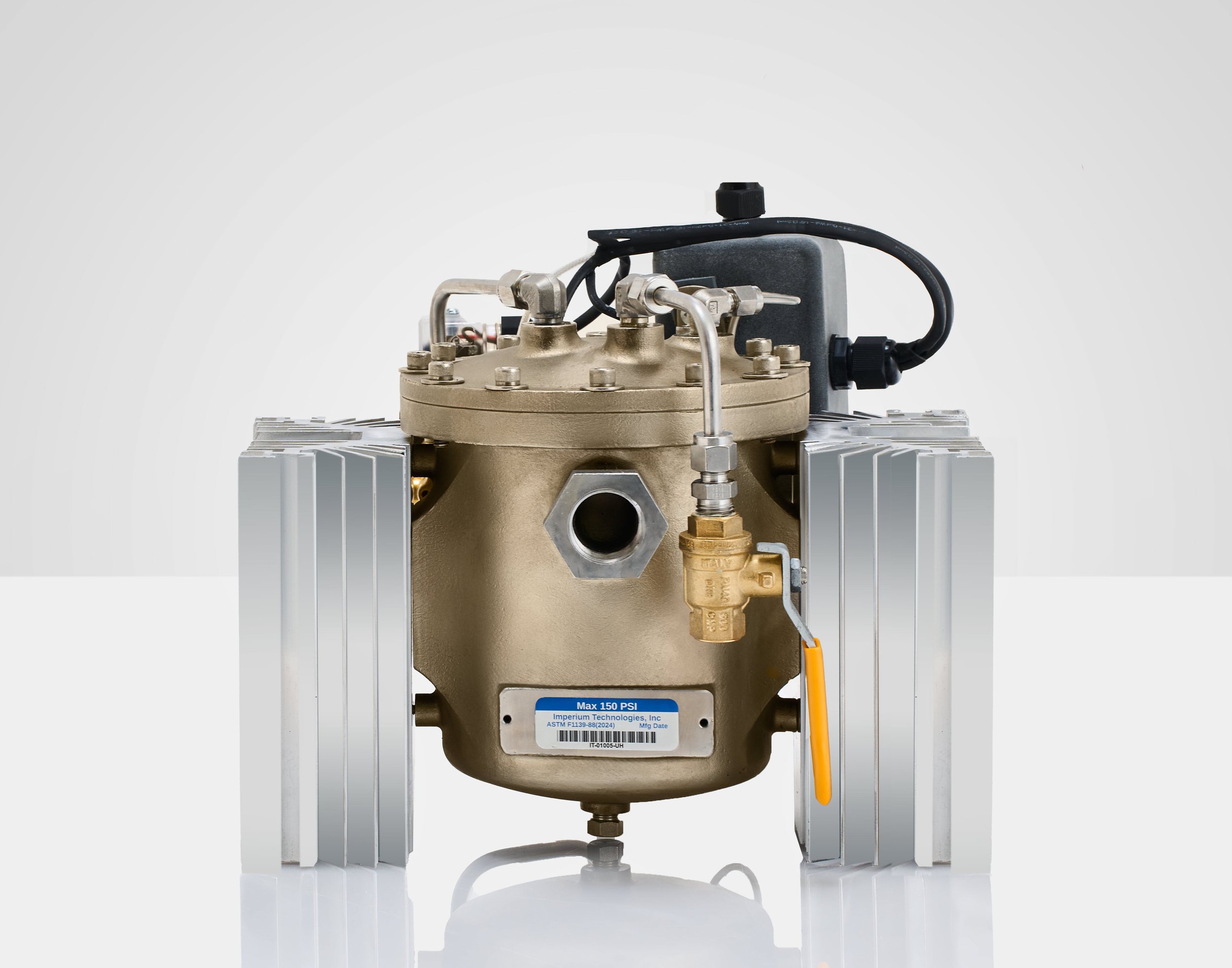
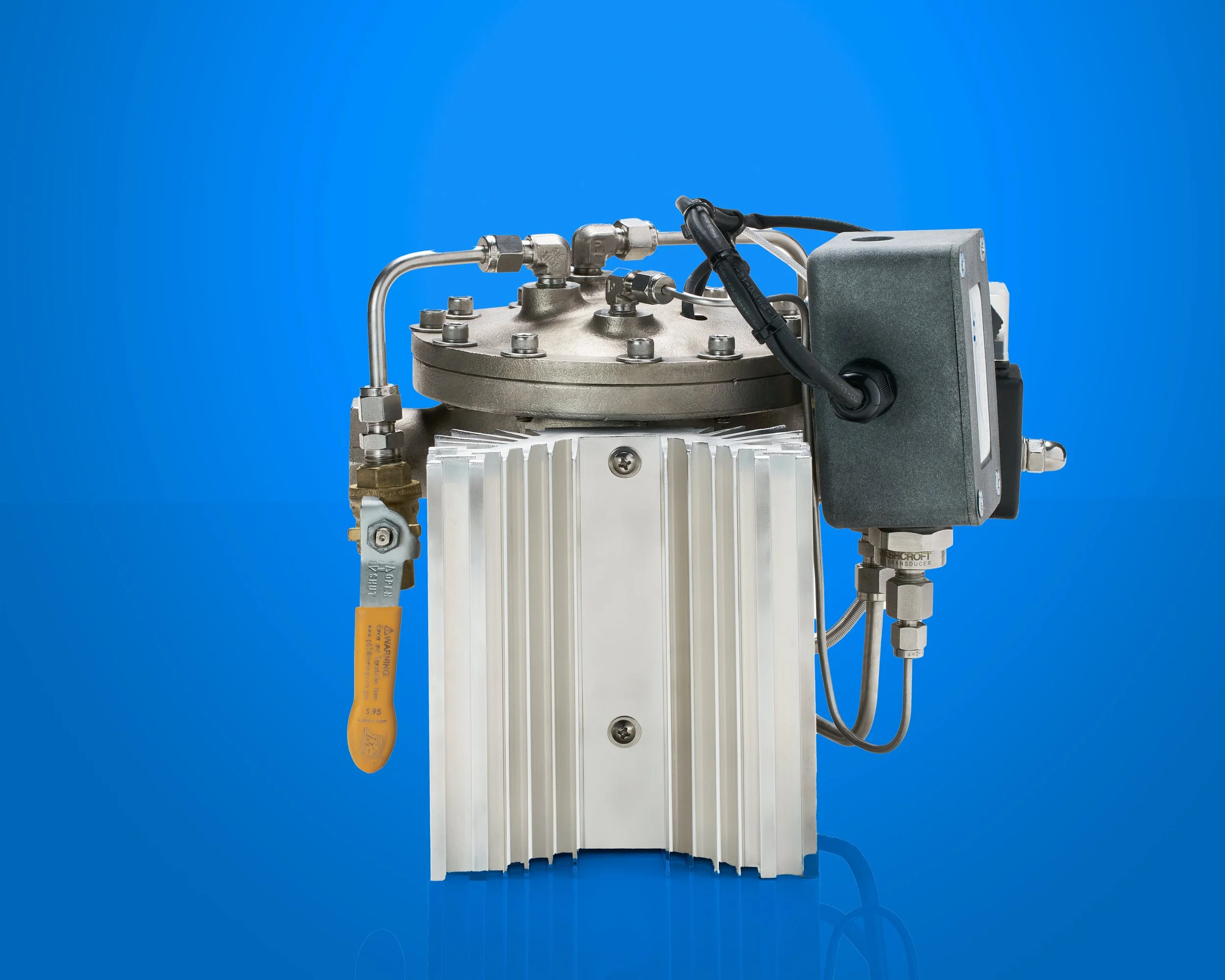
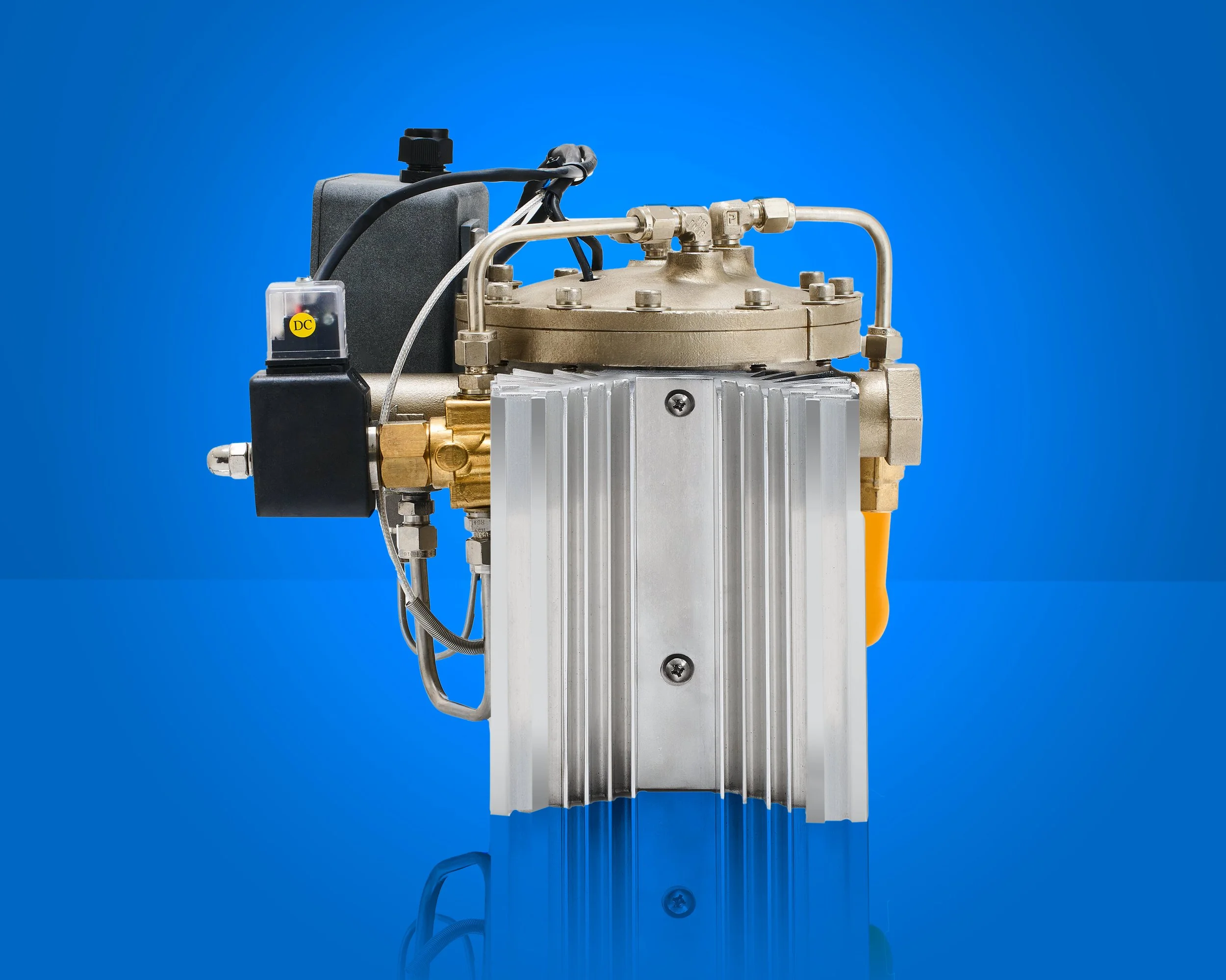
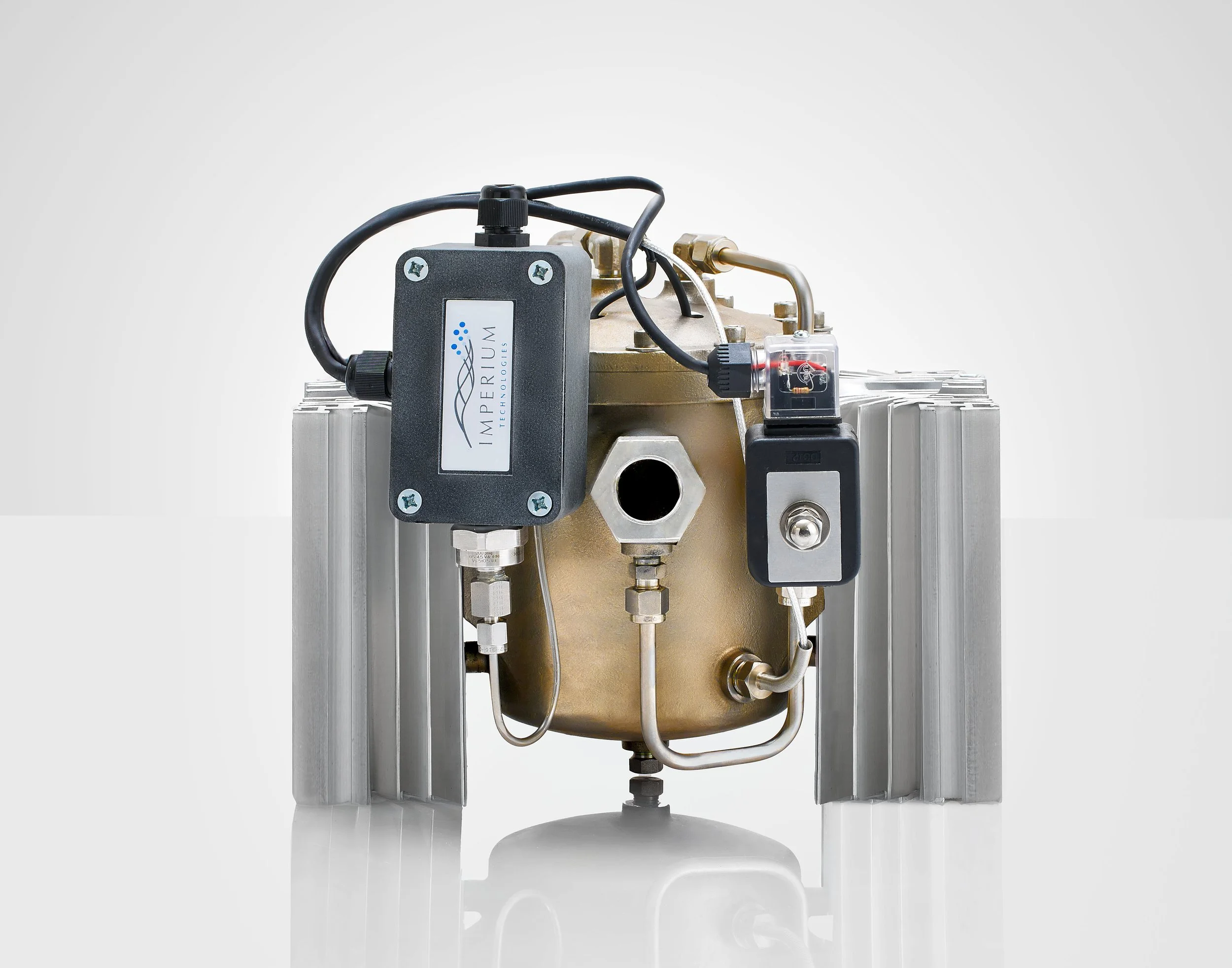
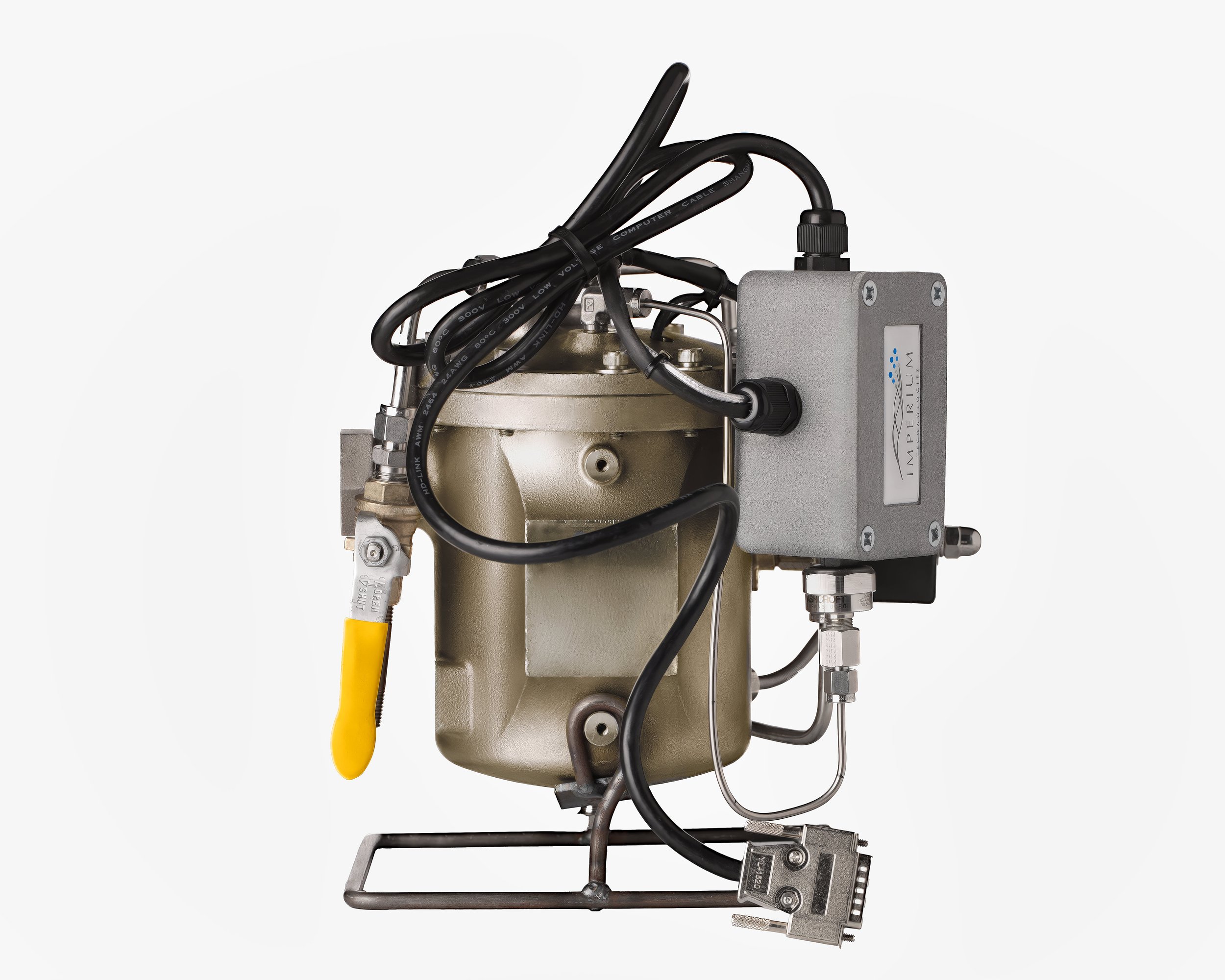
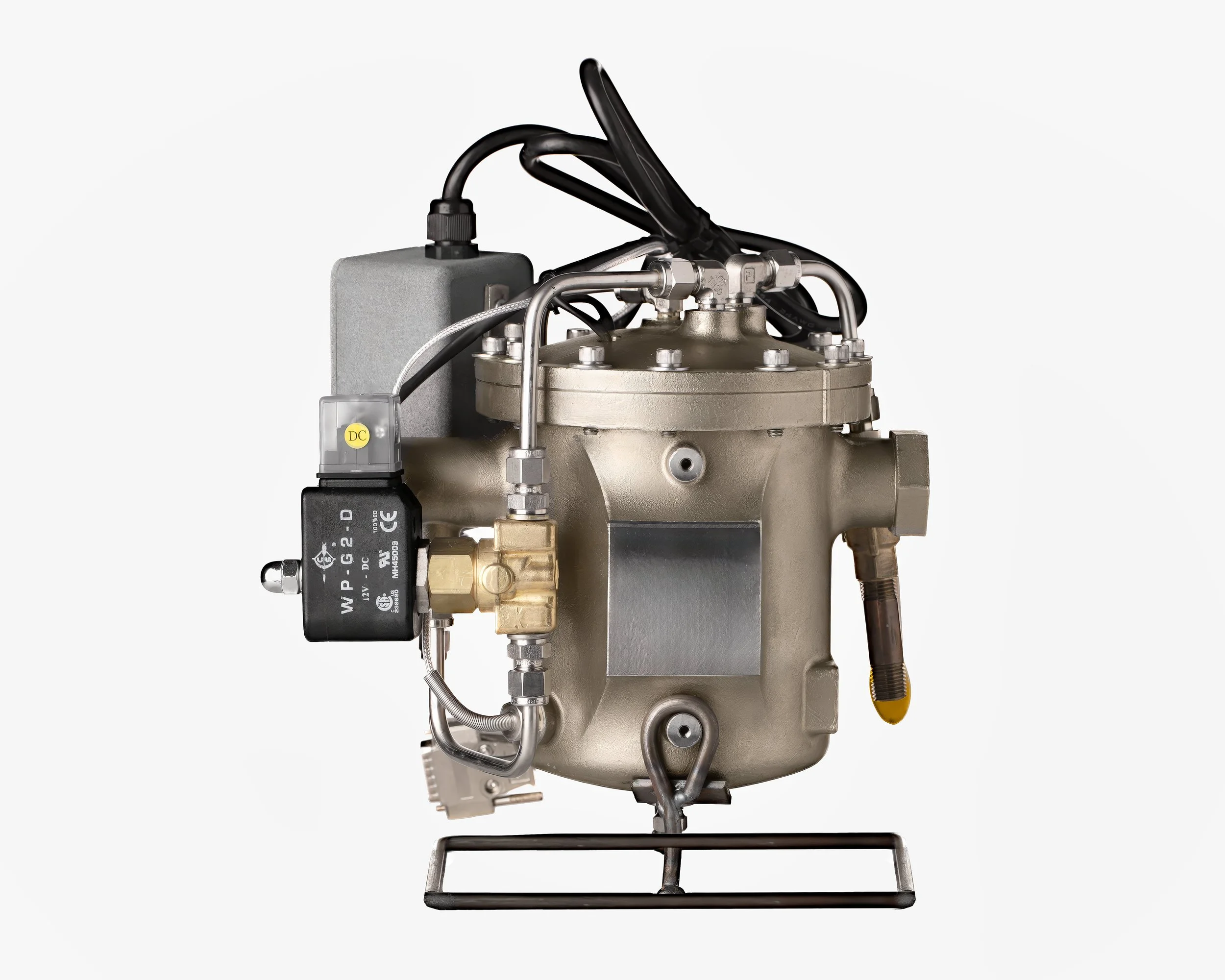
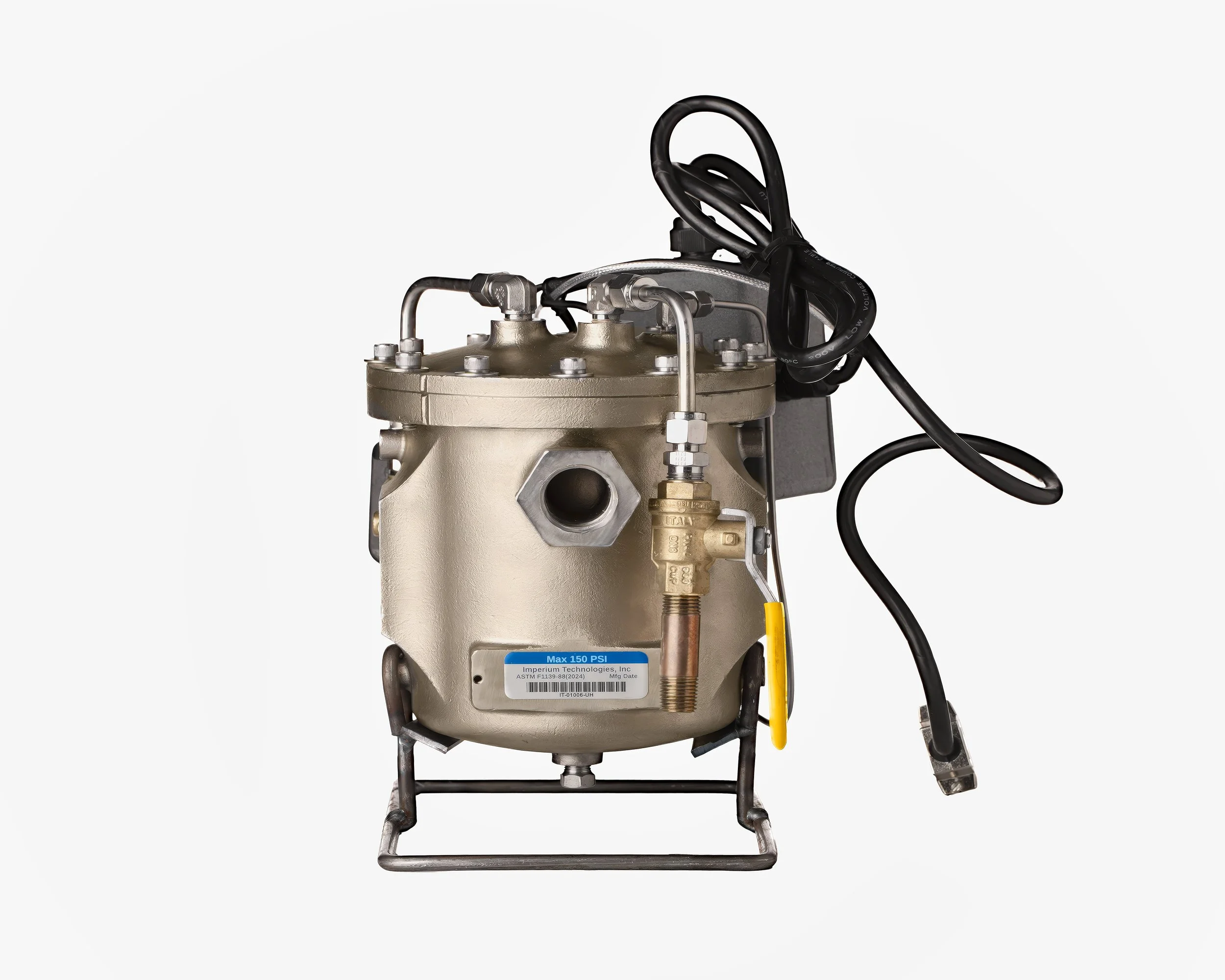
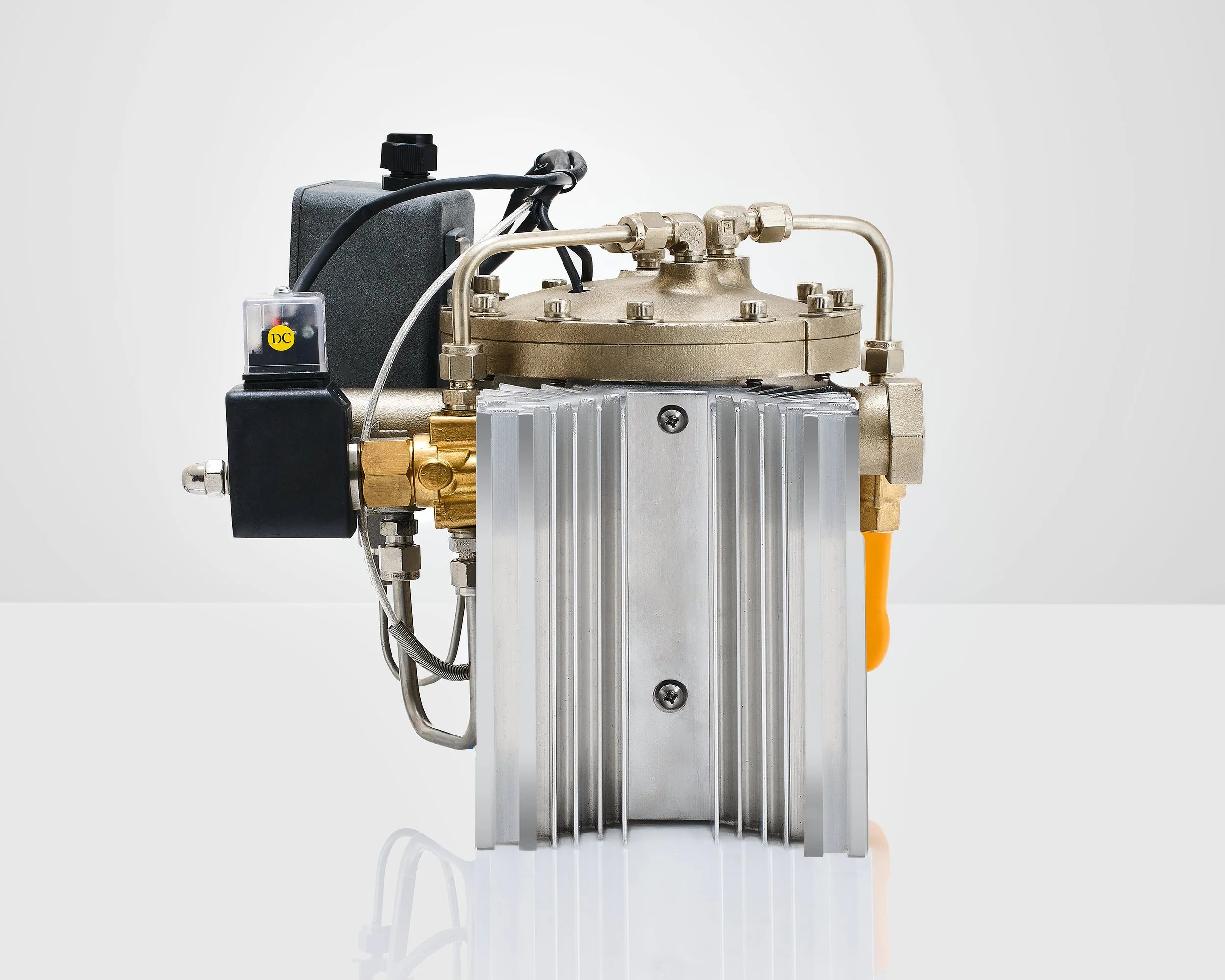
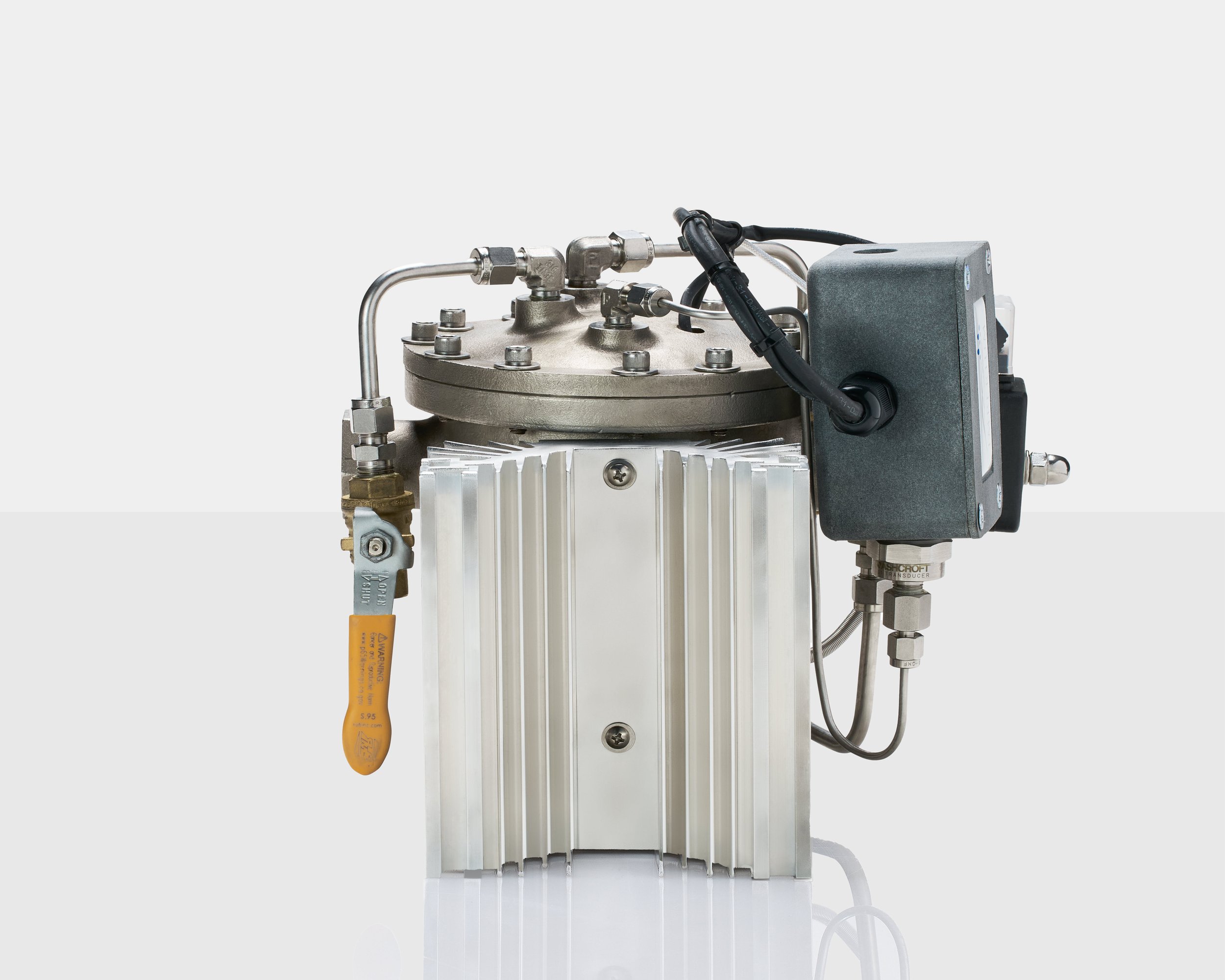
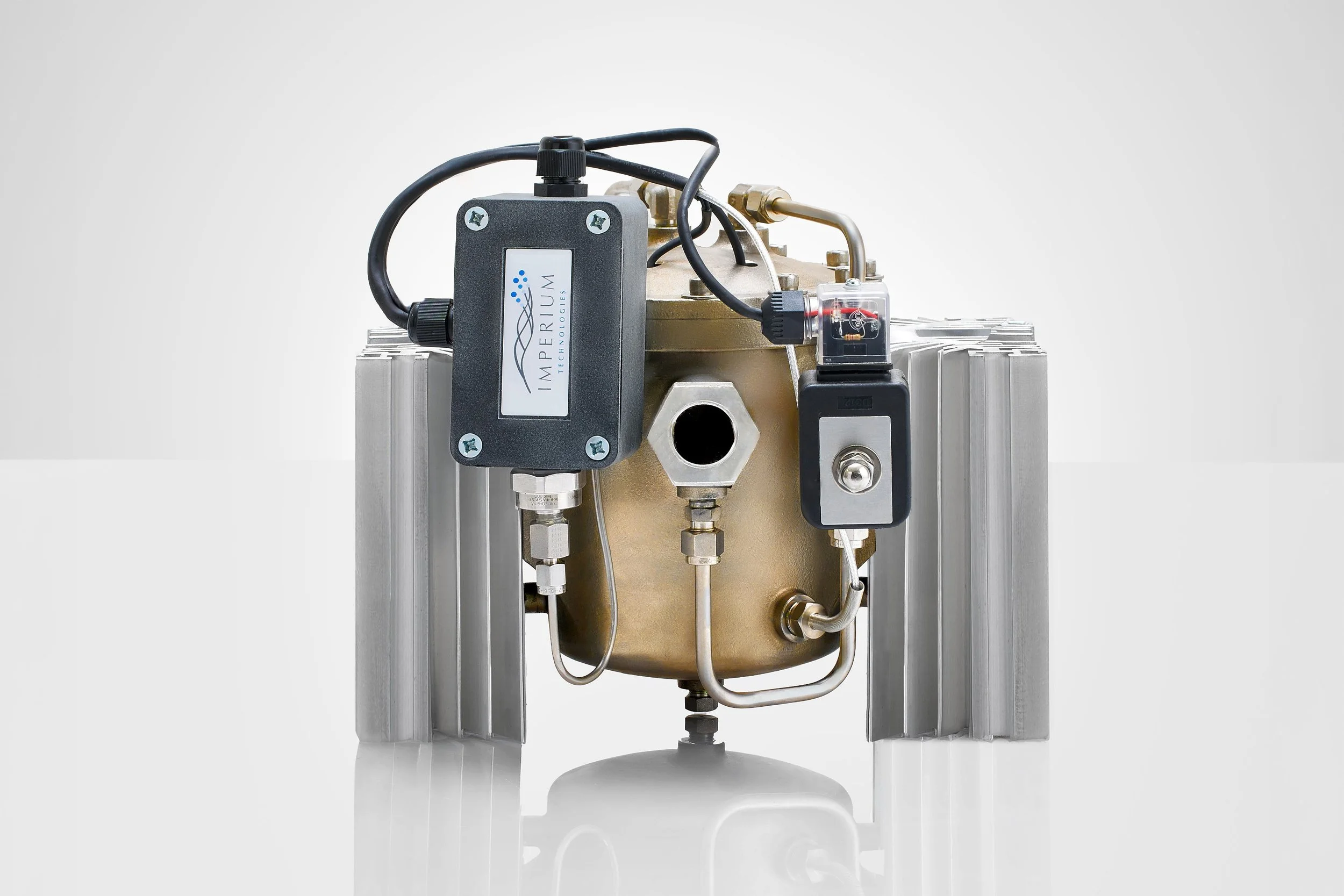
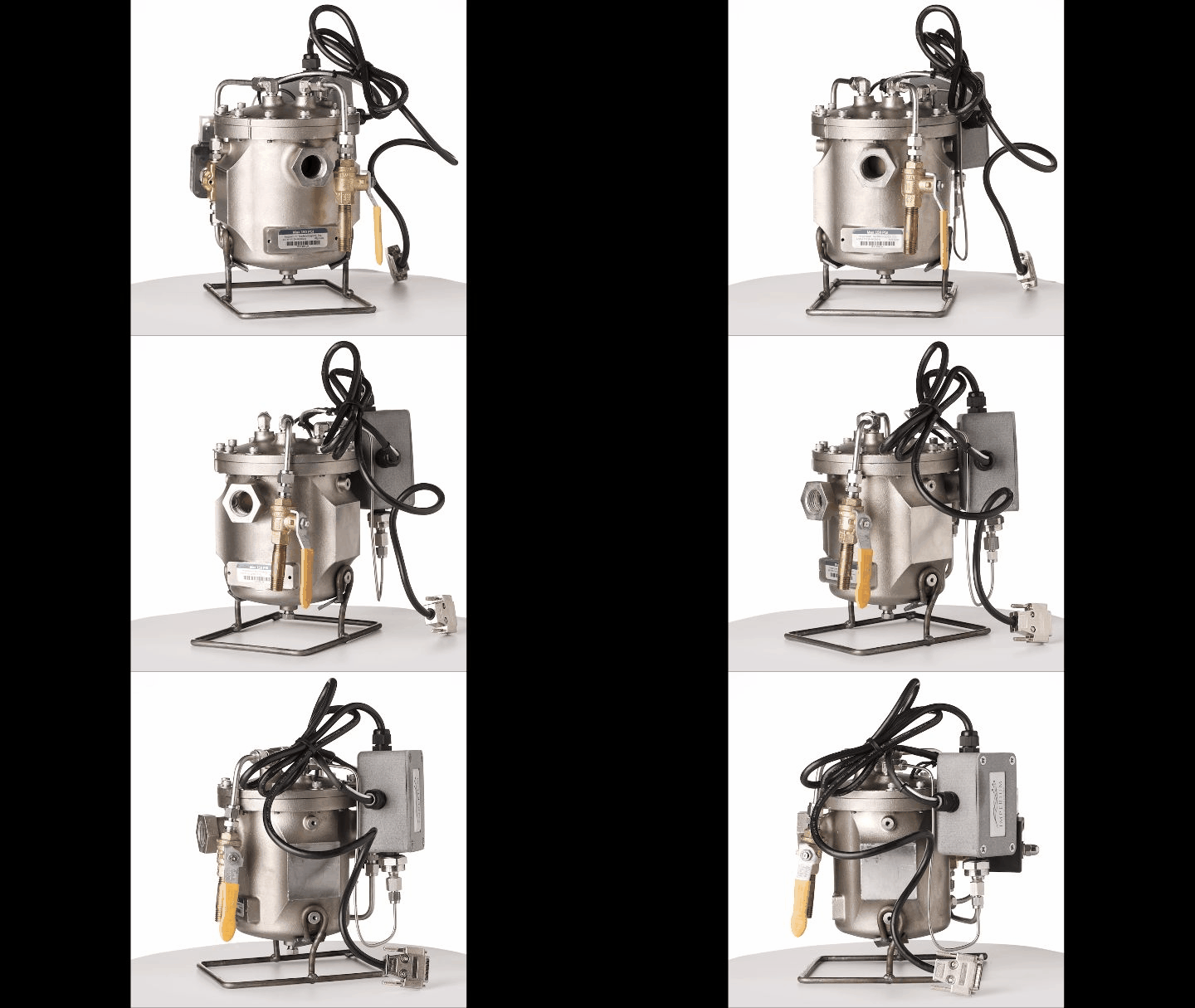
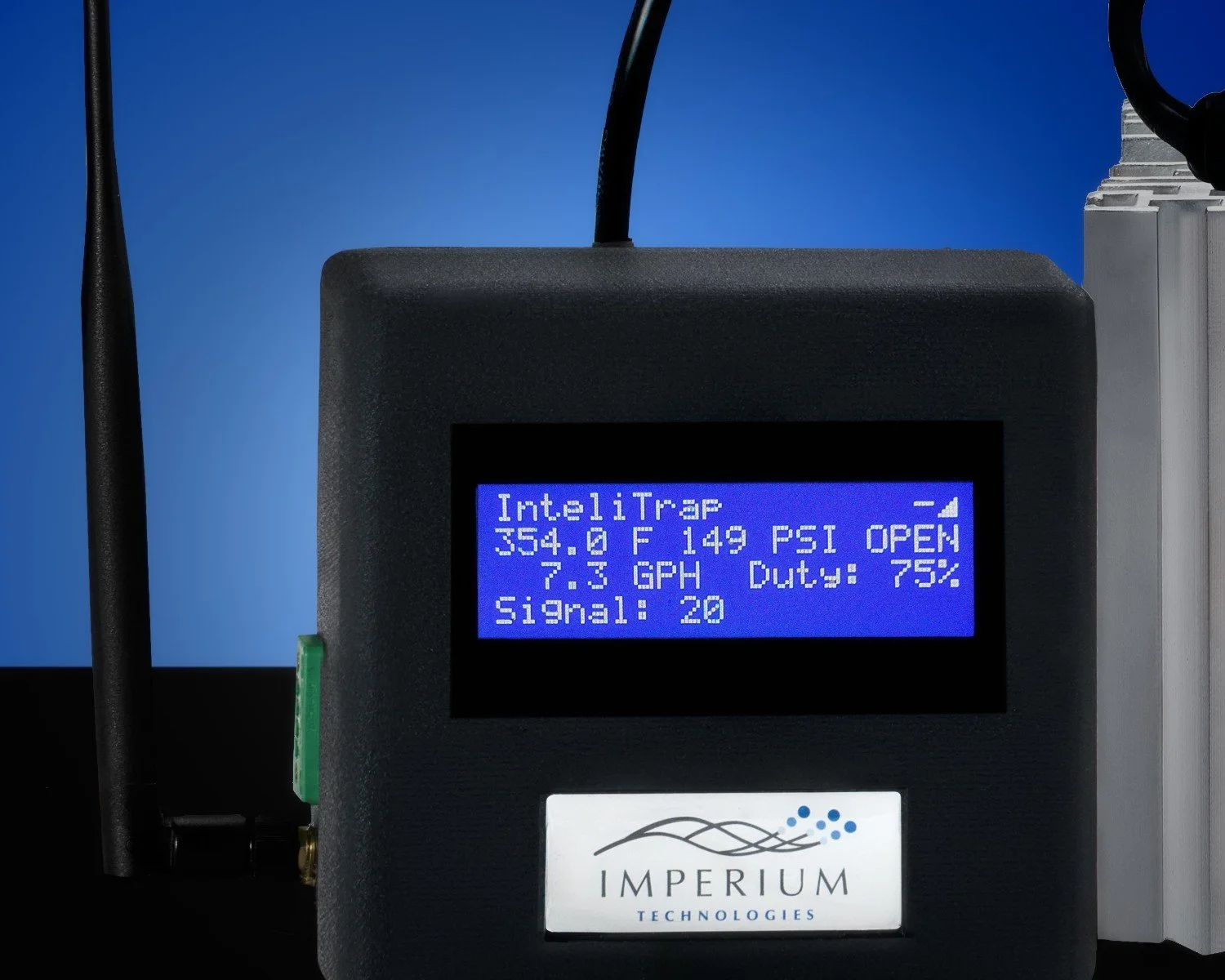
We agreed on 16 high-resolution still images across both traps. The self-powered model would get the full treatment: four angles on white, four on blue, plus macro shots of the fins, solenoid, steam valve, and controller unit. The utility-powered model would receive four white-background angles. Leah also requested transparent PNG cutouts of each trap's front and back for flexible use across marketing materials.
I scheduled time to meet Leah and the company's founder and CEO, Brad Medford, at their facility in North Austin to pick up the products. After a short delay waiting for the traps to ship from California, we connected in person and I got my first look at what I'd be working with.
PRODUCTION: PROTOTYPES DON'T POSE
Here's the part nobody warns you about with startup product photography: prototypes aren't finished goods. The two InteliTraps that arrived had been handled by engineers, rigged for live demonstrations, and shipped cross-country. They showed it. Scrapes, dust, fingerprints on the stainless steel, cabling that wasn't tucked cleanly, and connection ports that looked more "lab bench" than "marketing brochure." These were functional devices built to prove a concept — not to sit under studio lights at high resolution.
They were also heavy. And the surface materials were a mixed bag — some components were shiny metallic, others matte plastic, and the brushed stainless steel fell somewhere in between. Each surface responded to light differently, which meant constant adjustments between setups rather than dialing in one lighting scheme and running through the shot list.
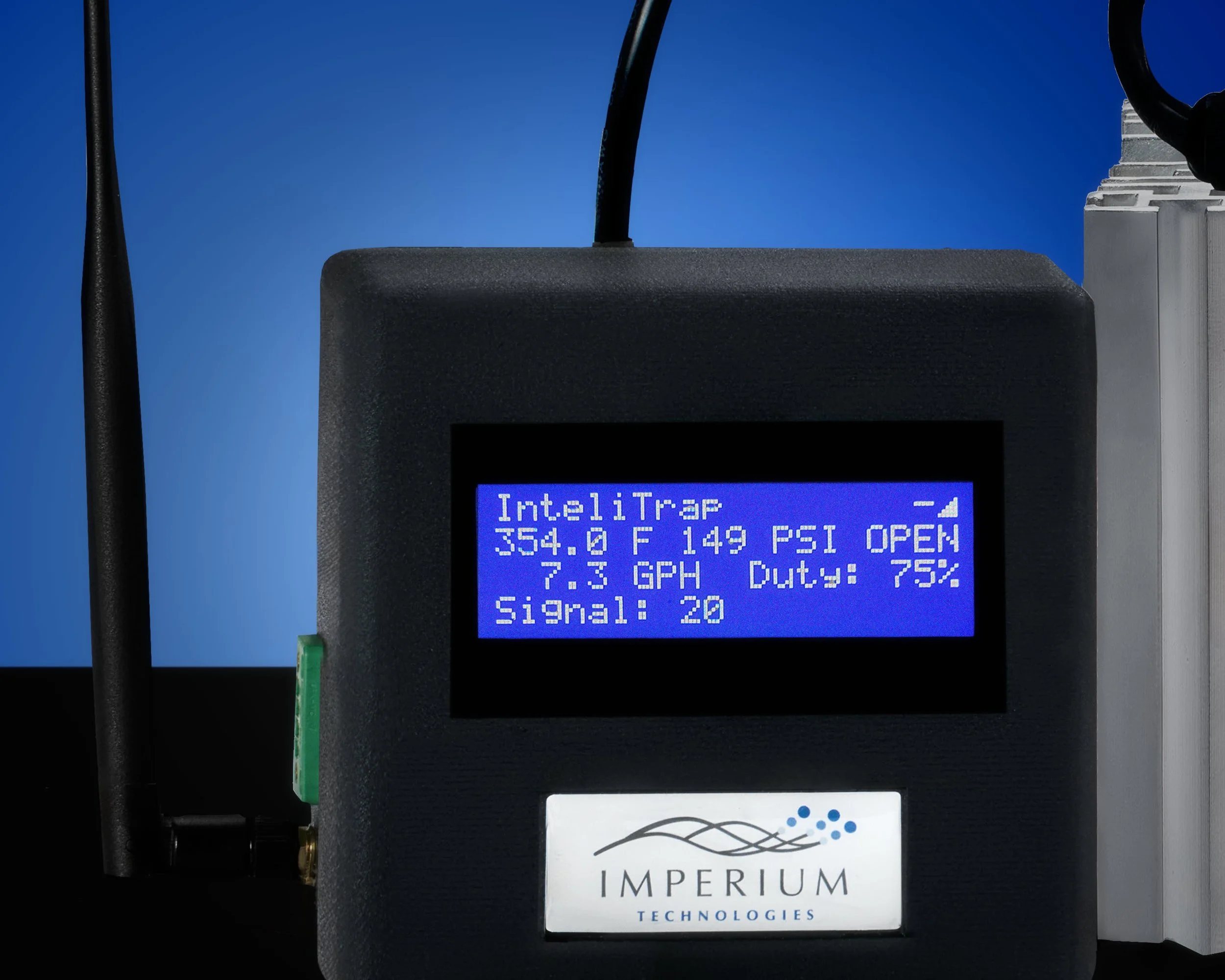
Despite the condition, I was excited about the project and set to work the same day. The first round of images — full-frame product shots from all four sides — went smoothly on both white and blue backgrounds. I used a white plexiglass base for select shots to create subtle reflections that elevated the presentation beyond standard catalog imagery. The blue-toned matte seamless matched their brand color and gave the hero shots a more polished, intentional feel.
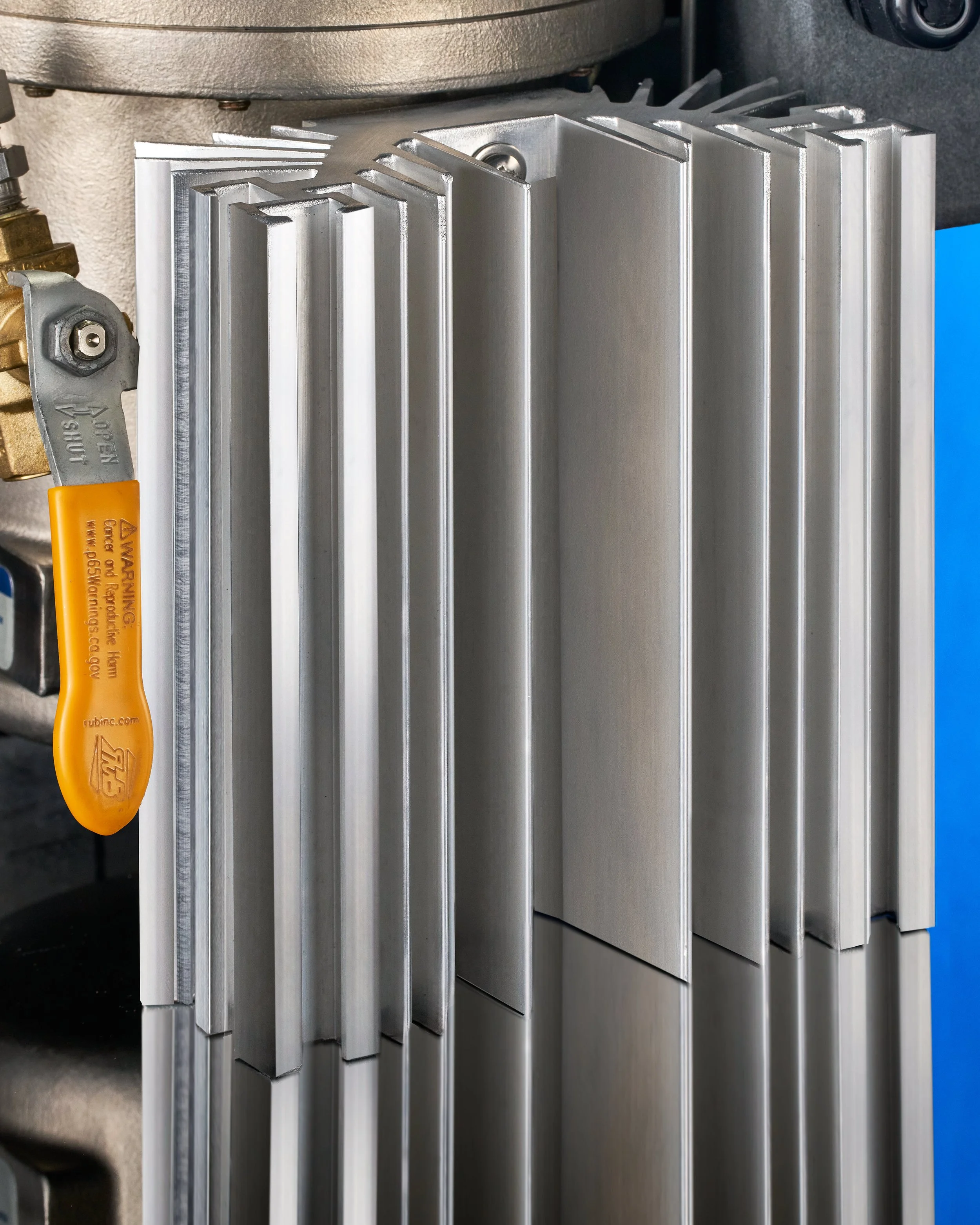
The macro and detail images were where things got interesting — and time-consuming. Shooting tight on the metallic fins, valve assemblies, and electronic components revealed every imperfection the prototypes carried. These were fascinating subjects from a visual standpoint: the repeating geometry of the fins, the texture of machined metal, the contrast between analog mechanics and digital readouts. But every scratch, dust particle, and manufacturing artifact was amplified at macro distance. I knew the post-production on these would be significant, and I underestimated just how much.

THE LATE ADD: MICRO REELS UNDER PRESSURE
During the product pickup, Leah mentioned they'd also love short video clips of each trap — 360-degree turntable rotations against a neutral background. This hadn't been part of our original scope, but I agreed to produce them as an add-on at an additional fee.
Simple enough in theory: center each product on a turntable, set the camera at eye level, and let it rotate. But I'd front-loaded my schedule with the still images and left myself only a single day for the video work. Then the timeline compressed further — Imperium needed the traps returned to California earlier than planned.
I found myself filming right up to the moment I needed to pack the products and drive them back to the North Austin facility. There wasn't time to review footage in my editing software before returning them, so I made a judgment call: shoot as many variations as possible, return the products, and work with what I had. It was a gamble, but it paid off. I was able to pull two clean, well-composed rotations for each trap that showcased them as the engineering achievements they are.
POST-PRODUCTION: THE REAL WORK BEGINS
This is where the project earned its complexity. The still images required extensive retouching in Photoshop — far more than I'd initially scoped. The prototype condition meant cloning clean areas of stainless steel over scratches, rebuilding sections of the metallic fins where handling had disrupted their precise vertical alignment, removing dust and debris from connection ports, and evening out inconsistencies across mixed-material surfaces.
The macro shots demanded the most attention. At that magnification, there's nowhere to hide — every blemish, every fingerprint, every manufacturing mark is front and center. Much of the work involved sampling clean sections of the trap and carefully compositing them over damaged areas to maintain a realistic, cohesive appearance. The fins alone required painstaking attention, as their repeating pattern of vertical lines needed to read as perfectly ordered even where the prototypes showed wear.
The video clips presented a different challenge. Advanced post-processing techniques that work beautifully for still images — cloning, compositing, frequency separation — don't translate frame-by-frame to video in the same way. Instead of planning for post, I'd filmed each clip with lighting positioned to minimize the appearance of surface imperfections. It wasn't the optimal approach, but it worked. The final clips were concise, well-lit, and presented the InteliTraps as the polished products they would eventually become in production.
I fell about a week behind my original schedule due to the post-production depth, but the final content package — still images, macro details, transparent PNGs, and micro reels — was delivered within budget. Leah and Brad were impressed with the results, particularly given the condition of the prototypes they'd handed me.
Services Provided:
Commercial product photography, industrial product photography, macro/detail photography, video production, concept development, post-production retouching & compositing
Industry: Industrial technology, manufacturing, IoT/smart devices
Location: Austin, TX
Client website: https://www.imperiumzone.com/
THE OUTCOME: FIRST IMPRESSIONS BUILT FROM SCRATCH
The imagery now serves as the visual foundation for Imperium Technologies' website and marketing efforts as they move toward production-scale manufacturing. For a company in the early stages of funding with a freshly patented product, that first impression matters — investors, partners, and potential customers will judge the product's credibility partly by how it's presented.
This project reinforced something I've come to appreciate about working with startups and emerging tech companies: you're not just photographing a product, you're helping build the perception of a company that doesn't have a visual track record yet. The prototypes were rough around the edges, but the imagery couldn't be. That gap between what exists and what needs to be communicated is where the real value of commercial photography lives.
I'm looking forward to seeing where Imperium goes from here — and when the production models roll off the line, I'd welcome the chance to photograph the finished article.