

White Background vs. Styled Product Photos: Which Your Store Needs
Start With One Question: Where Will These Images Live?
Most of the time, choosing between white background product photography and styled photos isn't a hard decision. It comes down to one question: where are these images going to live, and how will people use them? Answer that, and the right format is usually obvious.
If you need to show shoppers exactly what your product looks like on a store page, that's clean e-commerce work, the product on a white or simple background, shot to show every color, angle, and detail. If you're trying to make someone feel something in an ad or a campaign, that's styled work. Nine times out of ten a brand just needs accurate website images first, and the fancier stuff comes later, if at all. So before you spend anything, get clear on where the photos are headed. That decision saves you money.
What White Background Product Photography Is Best For
White background shots sell the facts. They show your product clearly, with accurate color and every angle a buyer studies before they commit. This is the workhorse of any online store, the image that answers "what exactly am I getting" on the page where someone decides to buy.
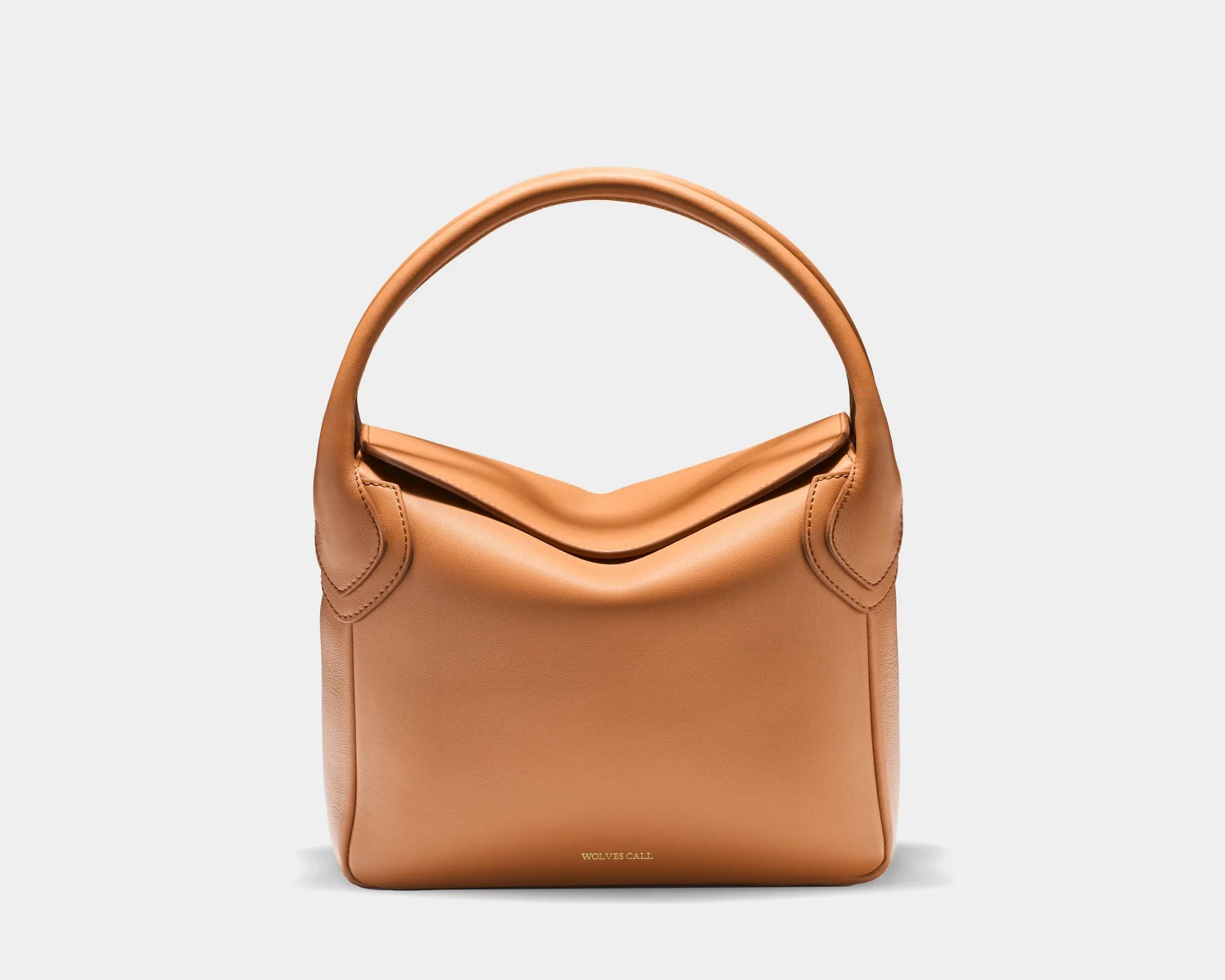
Clean, slightly off-white work for Wolves Call. White background does not have to mean basic.
It's also the most efficient work to produce, which keeps it affordable. The setup is clean and repeatable, so once it's dialed in, you can move through a whole catalog. That's why I tell most clients on a budget to start here. Get accurate, polished e-commerce product photography in place first, prove it works, and build from there.
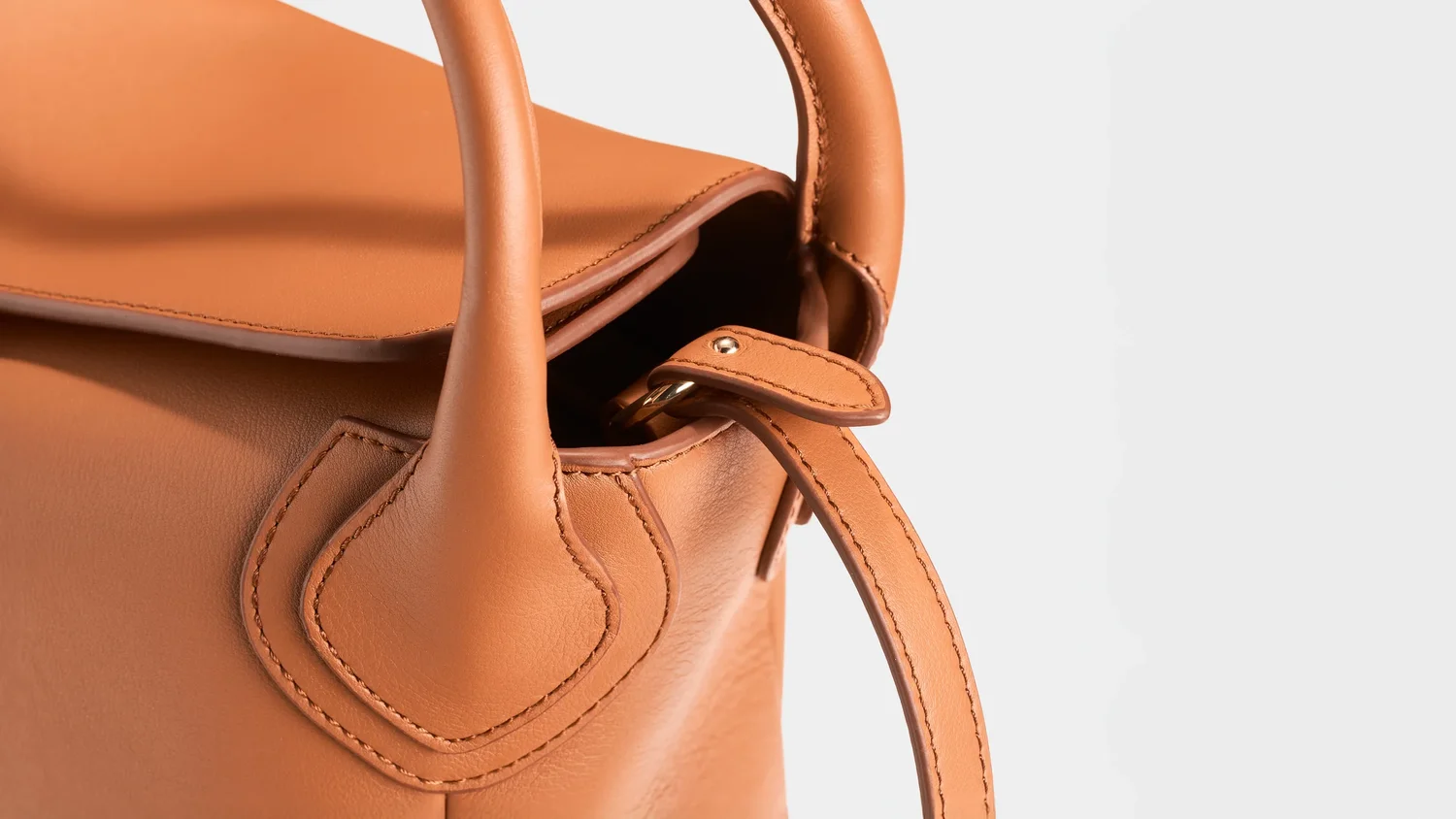
White doesn't mean boring or cheap, though. I worked with Wolves Call, a luxury handbag line whose designer wanted a high-end look without a styled set. We shot everything on a clean, slightly off-white background with natural shadow, the bags photographed open and hanging, with color held precisely accurate to the leather. It looked elegant and expensive without a single prop. Done right, white background work carries a premium product just fine.
What Styled and Lifestyle Product Photography Is Best For
Styled work sells a feeling. Instead of just documenting the product, lifestyle product photography shows it in the life your buyer wants, or solving the problem they're trying to fix. This is the hero shot in a magazine, the image on a billboard, the photo with light and mood built to make someone want the thing before they've read a word about it.
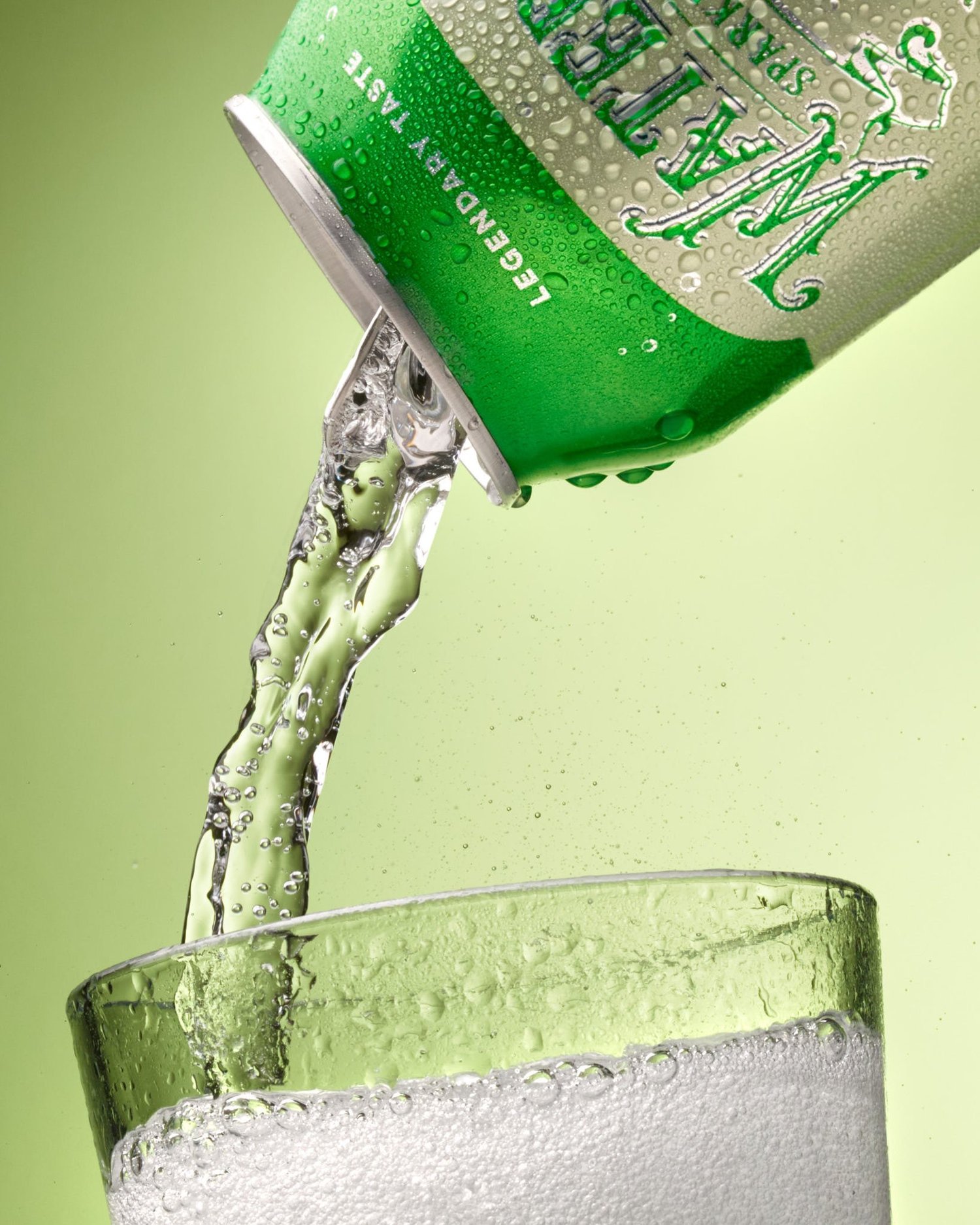
A styled pour shot for Waterloo sparkling water, built to sell a feeling rather than just document the can.
You see this anywhere the goal is emotion rather than information: advertising, social campaigns, a homepage banner that has to stop the scroll. It takes more planning, because the look has to match your brand and hold together across a set of images. That cohesion is something a customer feels without being able to name it, and it's what separates a campaign that lands from one that looks like a pile of nice pictures.
The honest caution: don't let anyone talk you into an all-styled shoot for a simple product before you need it. Styled images are powerful when there's a real campaign behind them. Spend there when you're ready to market, not before. You can see the kind of campaign and brand work I mean in my featured projects.
Why Most Stores Need Both, and Where to Start
This isn't really an either-or. Most brands need white-background shots as the foundation for selling on their site, plus a smaller set of styled hero images to anchor the page and carry the marketing. The two do different jobs, and a good store uses both.

TUMLOVE: the clean product and the styled kitchen frame came out of one shoot, and the styled images anchored the brand's first year of marketing.
A client of mine, a gut-healthy protein brand called TUMLOVE, is a good example of how that plays out. He came to me mostly needing clean white-background shots for his e-commerce page, with a couple of lifestyle frames. The white-background images were the workhorse that sold the product online. But the styled images we added, the powder mixed in a glass on a countertop, overhead flat lay product photography with his brand colors worked in, are what he actually built his first year of marketing around. The plain shots earned the sale. The styled shots built the brand.
So if your budget is tight, start with accurate white-background work and add styled images as the results justify it. If you're launching a campaign, plan for both from the start. Either way, knowing which image is doing which job keeps your spending honest. Shopify's own guide to e-commerce photography makes the same point about combining clean catalog shots with lifestyle images.
Selling on Amazon? Know the Image Rules First
Amazon is strict about your main image, and its software automatically flags anything that doesn't meet spec. For amazon product photography, the main image has to be the product on a pure white background, filling most of the frame (in my experience around 85 percent), with no logos, added text, or props. Get it wrong and the listing gets rejected, and reversing a rejection is a headache.
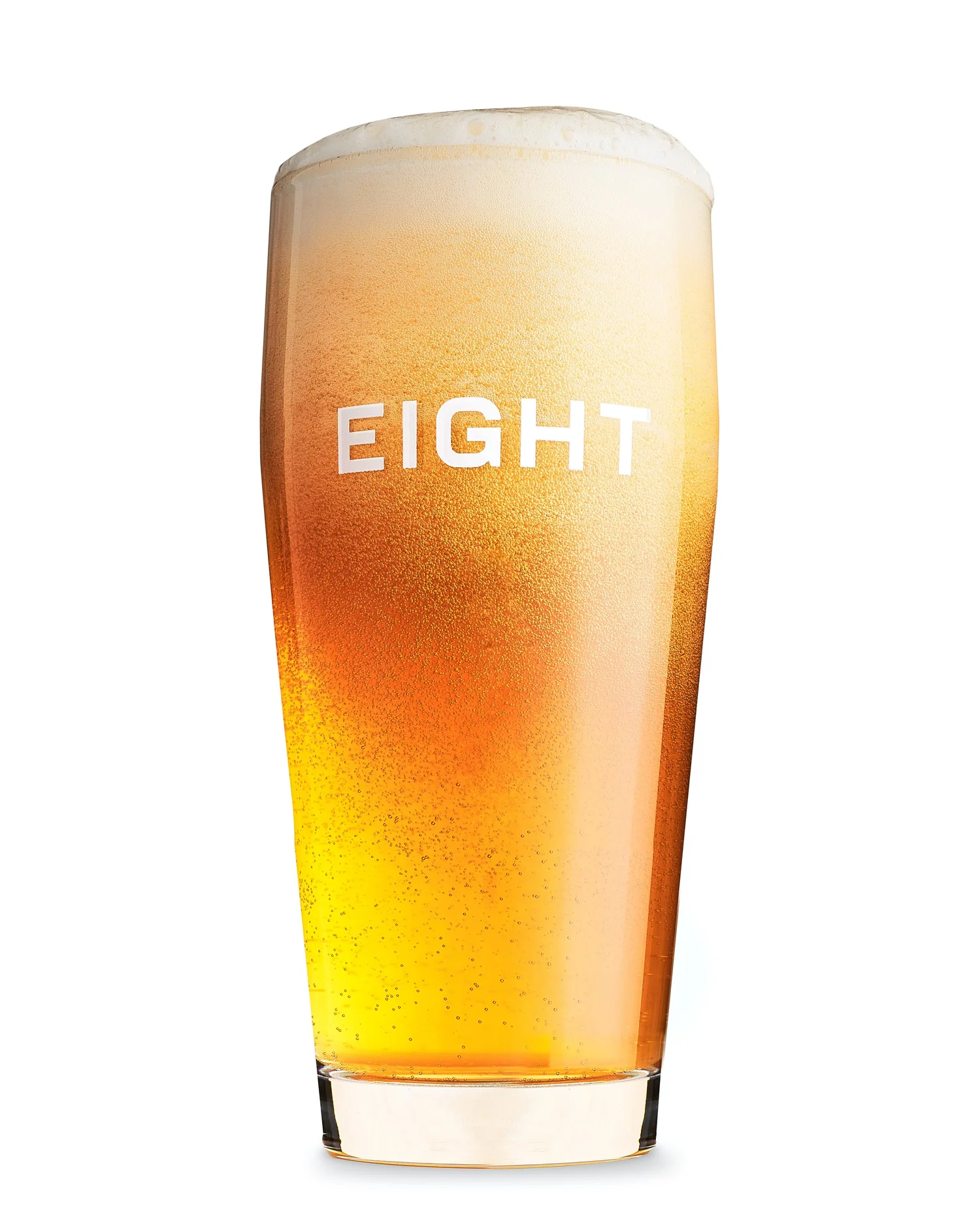
A true pure-white shot for Eight Light lager, the kind Amazon requires for a main image.
There are also category rules that trip people up. Footwear is typically shown as a single shoe at an angle, jewelry without display props, and apparel on a real model or a ghost mannequin rather than floating in midair. Because these amazon product photo requirements change from time to time, confirm the current version in Amazon's official product image requirements before you shoot.
The pure-white part is harder than it sounds, which is why so many self-shot listings get flagged. You can't just blast the background bright to force it white, because then the product's highlights blow out and the color goes flat and wrong. It takes balancing the light so the background reads clean white while the product keeps its detail.
Selling on Shopify or Your Own Site? Consistency Is the Job
Your own store is the opposite situation. There's no marketplace gatekeeper, so you can do whatever you want, which means the real challenge with shopify product photography isn't compliance, it's consistency. If one shot is on clean white and the next is even slightly off, the mismatch jumps out and reads as unprofessional. A set that looks like each photo was taken by a different person quietly costs you trust.
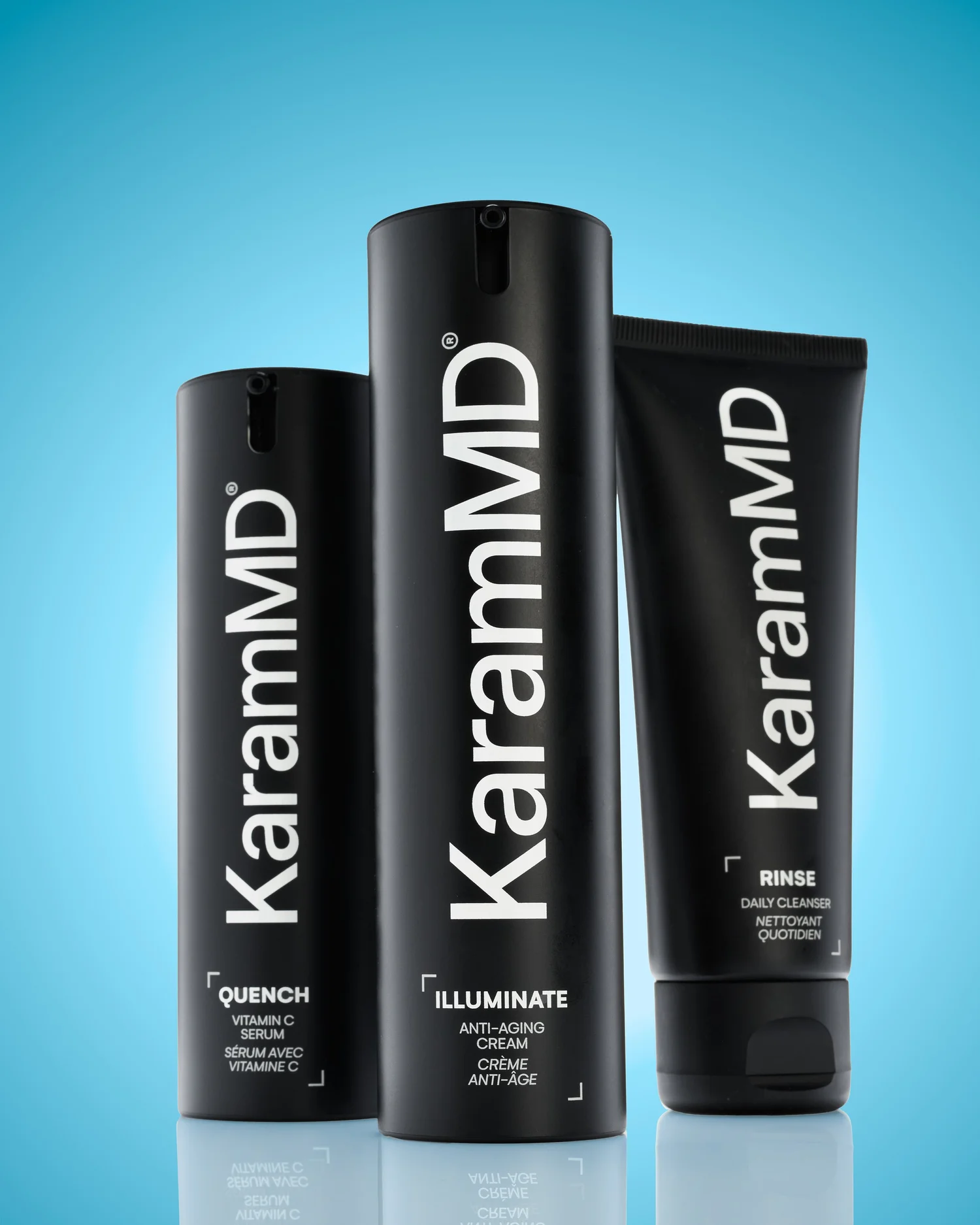
A matched set for Karam MD. Across a catalog, that shot-to-shot consistency is the whole job.
The upside is freedom. On your own site you can run the hero and stylized work Amazon won't allow in the main slot, a dramatic background, an interesting lighting effect, a real sense of mood. That's great for marketing and great for a brand page. The trick is holding a consistent look across the whole set so it feels like one brand, not a grab bag.
You can see how this plays across e-commerce photography in my photography portfolio, and if you also need motion for your store or ads, the videography portfolio shows that side of the work.
What Good White Background Product Photography Actually Takes
A lot of brands try this themselves first, and there's nothing wrong with that. It just helps to know where it usually goes sideways, so you can decide when it's worth handing off.
The big one is that "white" is rarely white. Most DIY setups use a small lightbox, and what looks white on screen is usually a dull gray you don't notice until it's next to a truly white image. You can't fix it by cranking the brightness, because that wrecks the product. The real solution is technique, softening and spreading the light so the background reads bright white while the product keeps its detail. Then multiply that across ten, fifteen, twenty products that all have to match, and consistency gets genuinely hard.
There's also everything you don't see until it's on screen at full size. Scratches, dust, and fingerprints show up on anything reflective, and cleaning all of that up frame by frame eats hours. None of this means you should never DIY. It's like a plumbing job: you can handle some things yourself, but once you're past about ten products or scaling a real catalog, your own time usually costs more than hiring it out. If you want to see how I keep a catalog consistent, my production process page walks through it, and there's more about how I work as well.
Still deciding what to spend where? My guide on what you're actually paying for in product photography breaks down the cost side. When you're ready to talk through what your store needs, tell me about your product and where the images are going to live, and I'll point you to the right mix.
Frequently Asked Questions
Should my product photos be on a pure white or off-white background?
It depends on where they'll appear. Amazon and most marketplaces require a true pure white main image, so there you have no choice. On your own website, a very slightly off-white background often looks better, because pure white product images can blend into a white page and lose their edges. A hint of tone keeps the product defined and can read more premium. The right call comes down to your platform and your site's own background, which is worth deciding before the shoot rather than after.
Can I use a lifestyle or styled photo as my main image on Amazon?
No. Amazon's main image has to be the product alone on a pure white background, with no props, text, or scenery. A styled or lifestyle shot will get the listing flagged. The good news is you can use lifestyle and styled images in the secondary slots, where they help shoppers picture the product in use and understand its size. So the move is a clean white-background shot in the main position and your styled images right behind it, not one or the other.
Can the same product photos work for both Amazon and my own website?
Partly. Your clean white-background shots work everywhere, so those carry across Amazon, your Shopify store, and your social channels without trouble. Where it splits is the creative work. Amazon won't allow a styled hero in the main slot, but your own site welcomes it. The efficient approach is to shoot the white-background set that works everywhere, then add the styled images your website and ads can use freely. One shoot, planned well, can cover both if you map out where each image needs to go first.
Do I still need white-background photos if my brand is built on lifestyle imagery?
Almost always, yes. Even the most lifestyle-driven brands need clean, accurate shots somewhere, on product pages, in spec sheets, for retail partners, or on marketplaces that require them. Styled images sell the feeling, but at some point a buyer wants to see exactly what the product looks like before they commit, and that's what a white-background shot delivers. Think of the clean images as the foundation and the lifestyle work as what you build on top, rather than choosing one over the other.
Are phone photos or a cheap lightbox good enough for product shots?
Sometimes, for a brand-new store finding its feet. But know the limits. A small lightbox usually produces a grayish background rather than true white, and phone shots struggle with reflective or detailed products and with staying consistent across a full catalog. For a few simple items, DIY can get you started. Once you're scaling, selling on a marketplace with strict image rules, or shooting anything shiny or intricate, the time and rework usually outweigh the savings, and clean professional images start paying for themselves.
Do you offer both white-background and styled shots in the same shoot?
Yes, and combining them is often the smartest use of a budget. When I have a product set up and lit, it's efficient to capture the clean white-background images your store needs and then build a few styled frames from the same session. Planning both up front, rather than booking two separate shoots, saves setup time and keeps the look consistent between your catalog images and your marketing. We sort out the right mix in advance, based on where each image is going to be used.
About the Author
Mark A. Bowers is a commercial photographer and videographer in Austin, Texas who has specialized in product and e-commerce photography for more than ten years. He works with brands nationwide, from local startups to national advertising campaigns, covering everything from white-background e-commerce catalogs to styled hero images and product video. Peerspace named him the #2 commercial product photographer in Austin in 2022, and his work has been featured in Voyage Austin. See his portfolio at markbowersphotography.com or reach him at info@markbowersphotography.com.