
The ten-dollar question
Every brand conversation I have eventually lands in the same place: AI images cost ten bucks — why would we pay for a photographer?
Fair question. Here's the one you should be asking instead: how does that ten-dollar image guarantee our logo, our copy, our typeface, and our packaging come out accurate? I've asked. I haven't gotten an answer yet.
That gap is the whole reason my workflow exists.
Every generation starts with a photograph
Every AI workflow I run starts with an actual photograph of the actual product — one I shot. Not a phone snap. Not a render the client emailed over. A properly lit set of captures, from multiple angles, in multiple perspectives.
You can prompt all day trying to get a generation model to invent your product from a description. You might eventually get close. It'll take days, and "close" isn't good enough when the thing on screen is supposed to be the thing in the box. Setting the product up, lighting it evenly, and shooting it gets a better result in a fraction of the time. The camera doesn't approximate your product. It records it.
The top of your product isn't smooth and flat
The failure I see most is single-perspective capture. Shoot a product straight-on only, and the model has no idea what the top looks like — so it assumes smooth and flat. Almost nothing is smooth and flat on top. That's usually where the branding lives.
My fix is boring and mechanical, which is why it works:
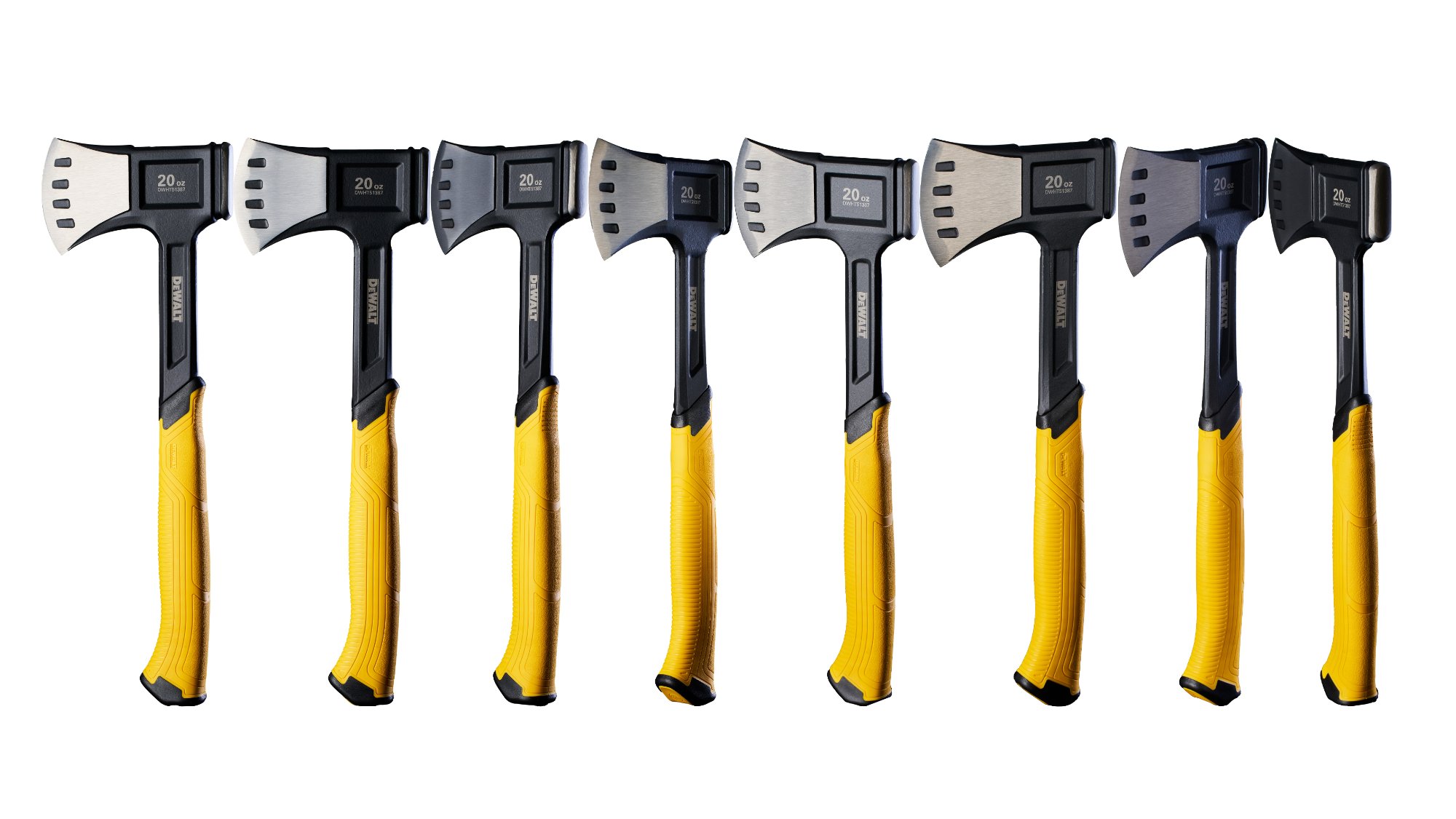
Product on a turntable, camera level. Rotate 45–90 degrees per frame, all the way around.
Raise the camera to roughly 45 degrees looking down and repeat. Same lighting — nothing else moves.
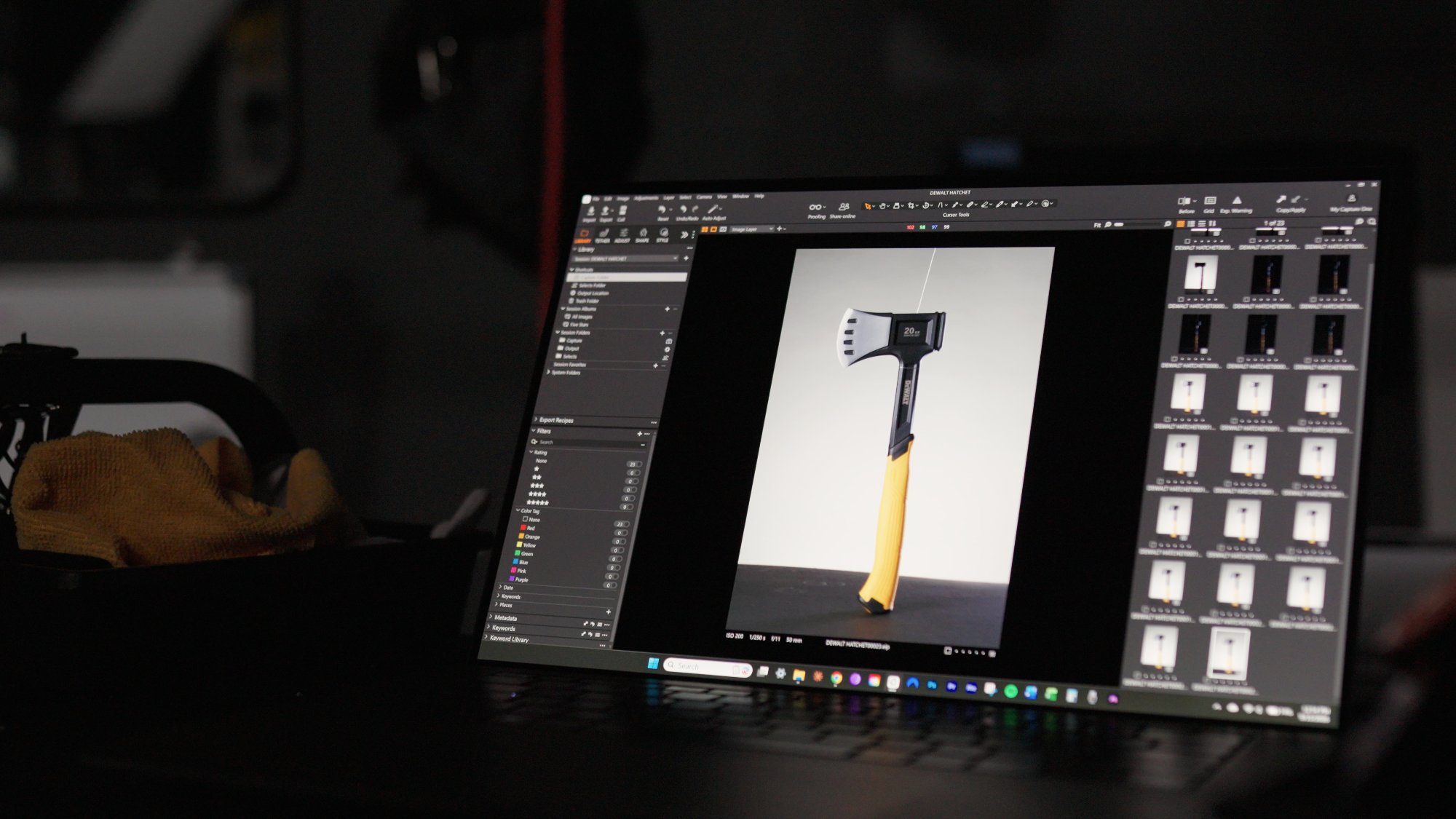
Color checker in the first frame, tethered capture, calibrated against the physical product on the table.
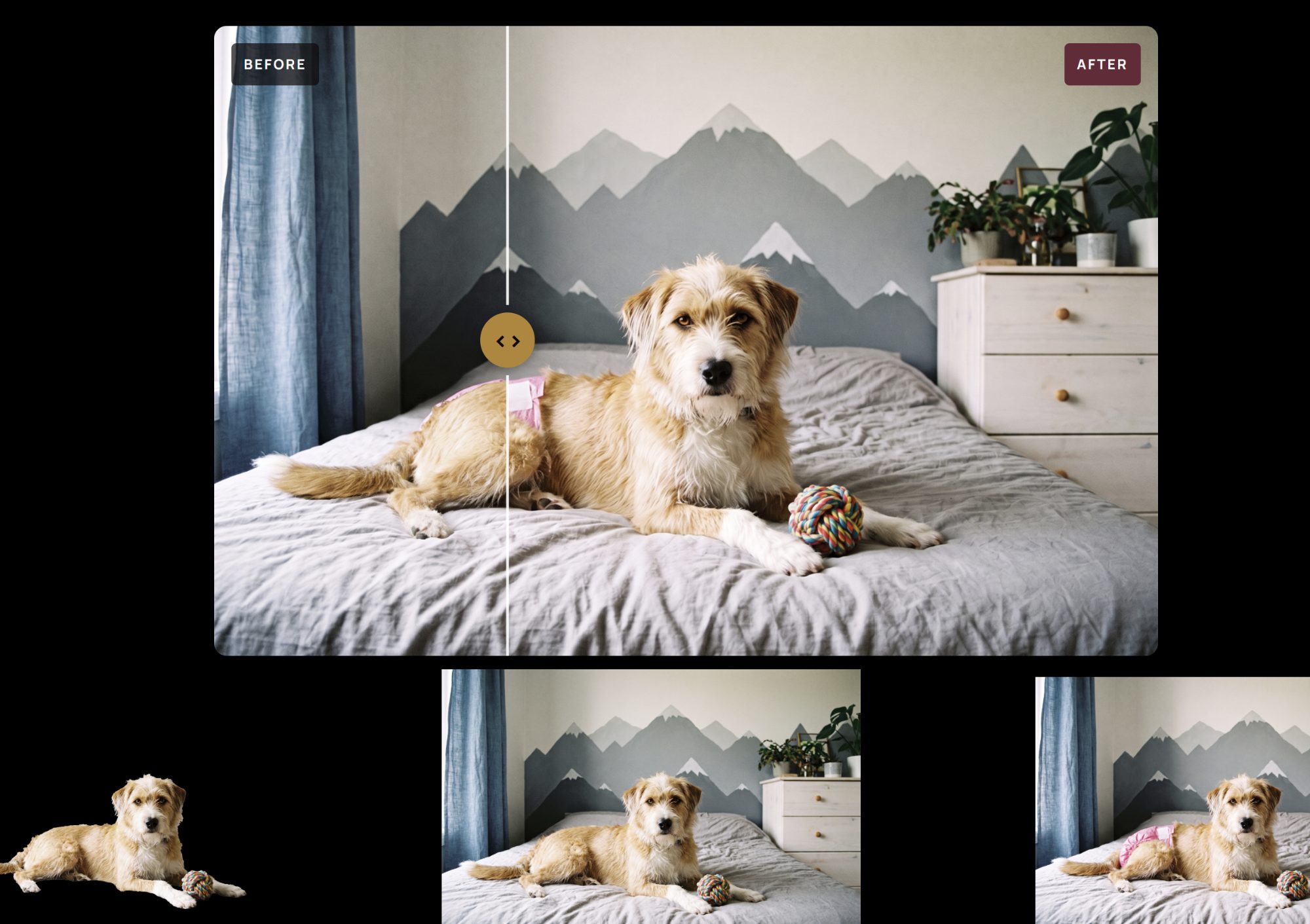
Masks and background removal in Photoshop. The plates become a saved, reusable element that is the product.
The eight plates. Level rotation plus the 45° pass — everything the model needs to know the whole object.
A hatchet, three lights, and fishing line
Nobody hired me for this one. I was at Home Depot, saw a DeWalt hatchet, and bought it because I knew it would photograph well — that signature yellow against black brushed steel — and because I wanted to prove the workflow end to end. (Spec work — not affiliated with or commissioned by DeWalt.)
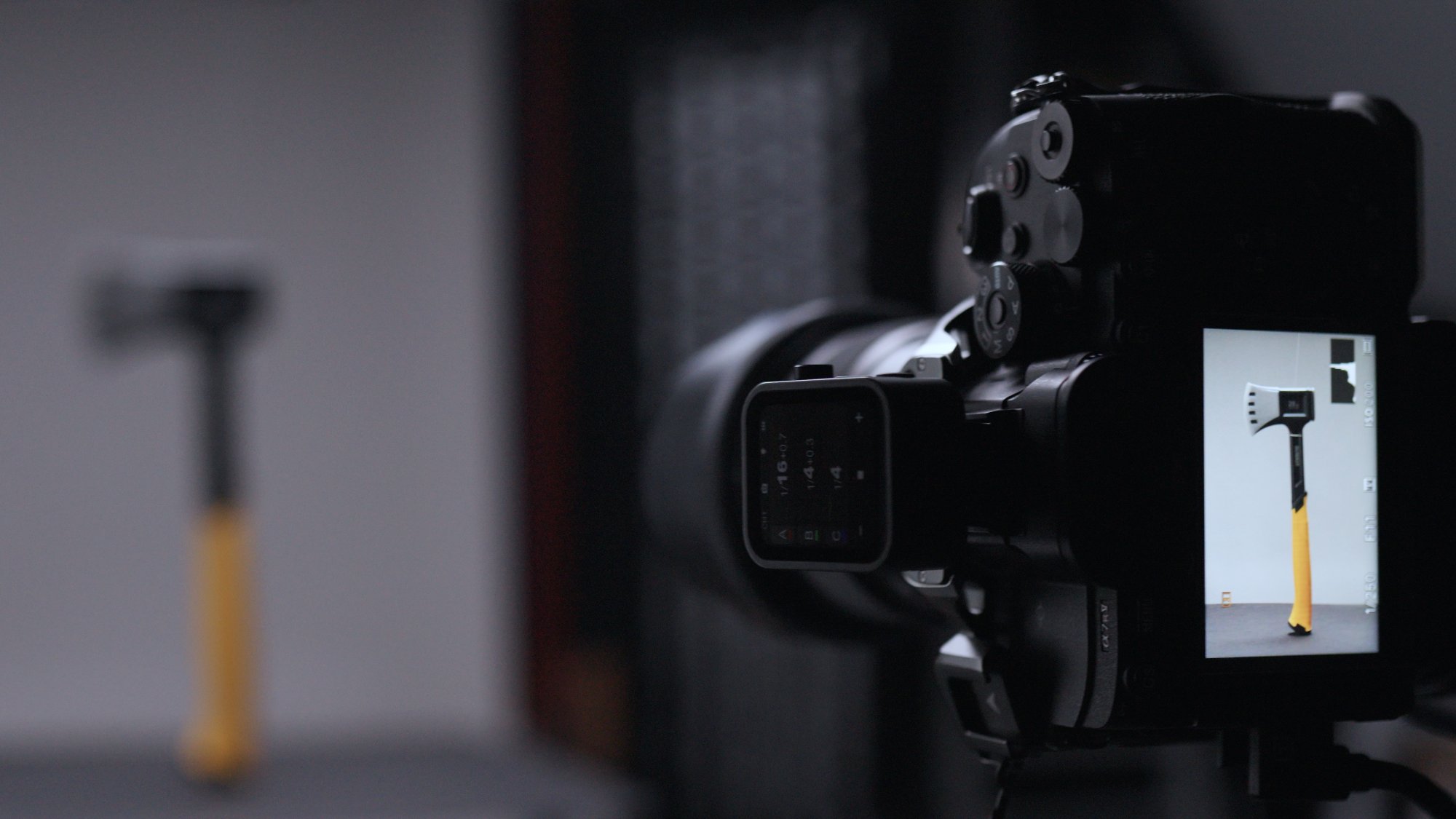
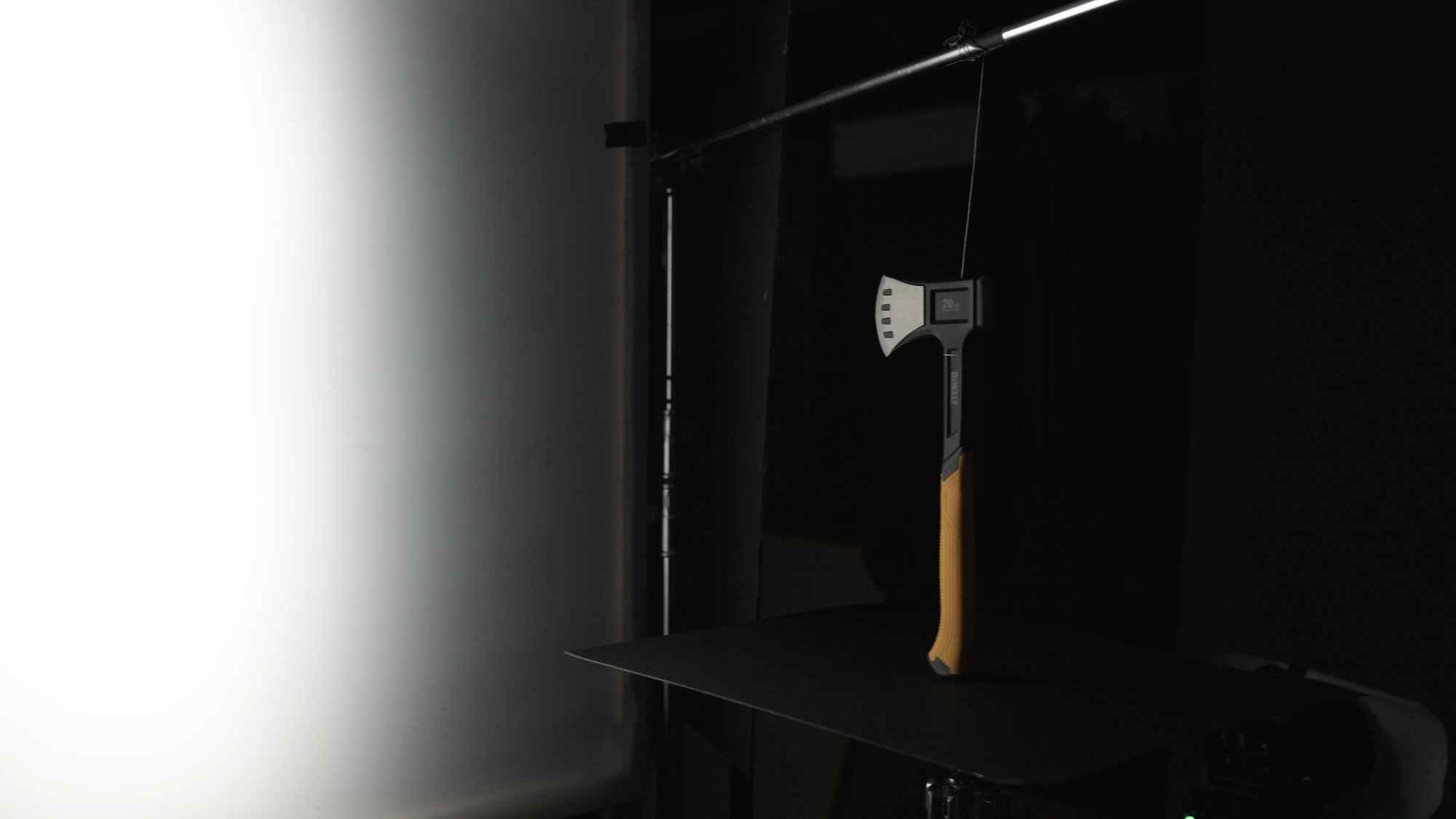
The hatchet is top-heavy and won't stand, so it hung from fishing line off a C-stand arm over a black tabletop. Three lights: a narrow strip softbox as key, camera left; an edge light 45 degrees behind-right for separation; and a speedlight with a reflector kicking into the gray seamless. Tripod sandbagged, shot tethered, color checker in the first frame — so the yellow matched DeWalt's actual yellow instead of a model's guess at it.
Six frames straight-on around the rotation. Raise the camera about a foot and a half, aim down, repeat. Then into Photoshop for masks and background removal, and the clean plates saved as a reusable element.
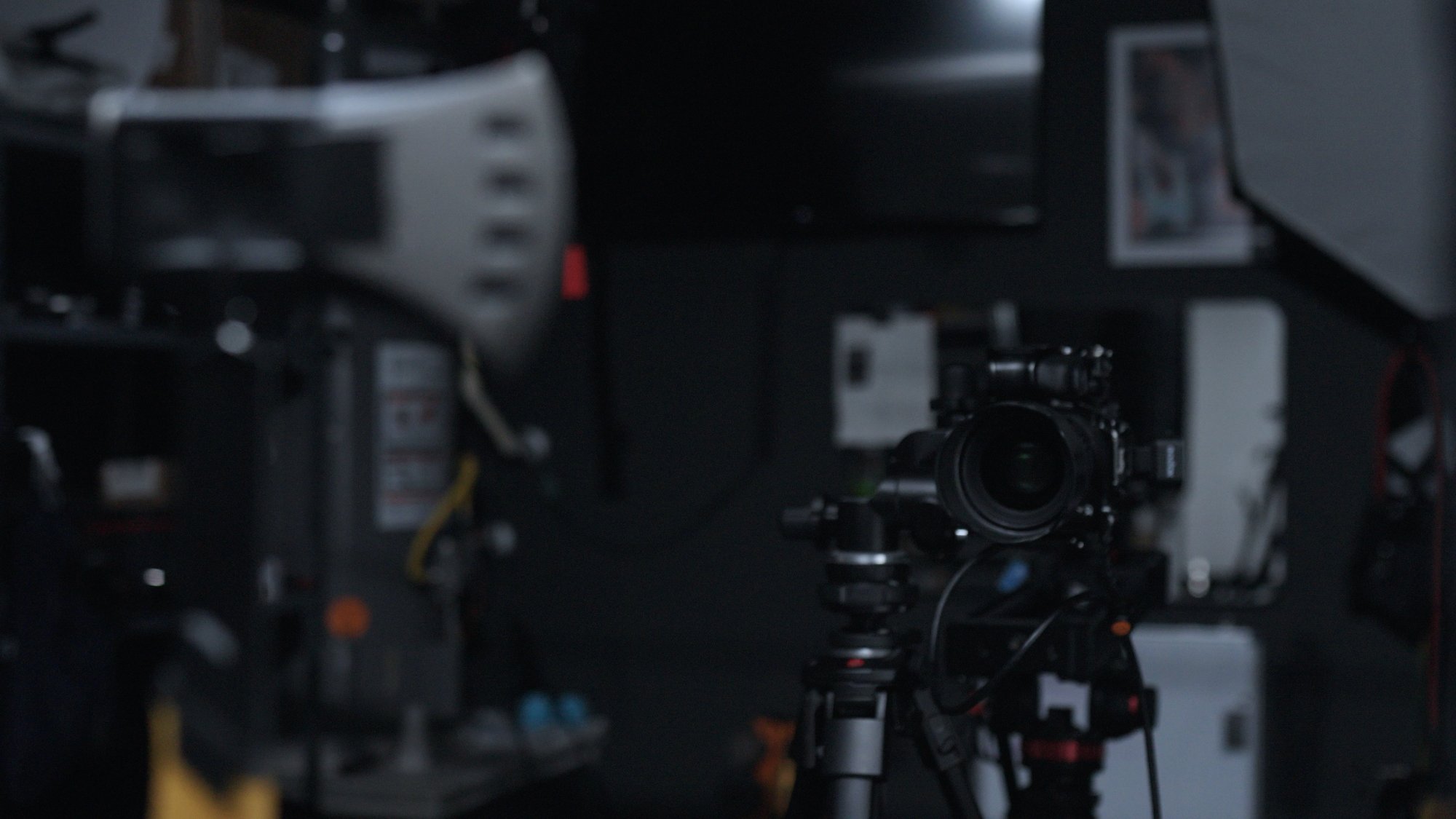
The whole set: three lights, fishing line, a sandbagged tripod, and a tether cable. The hatchet never left the table.
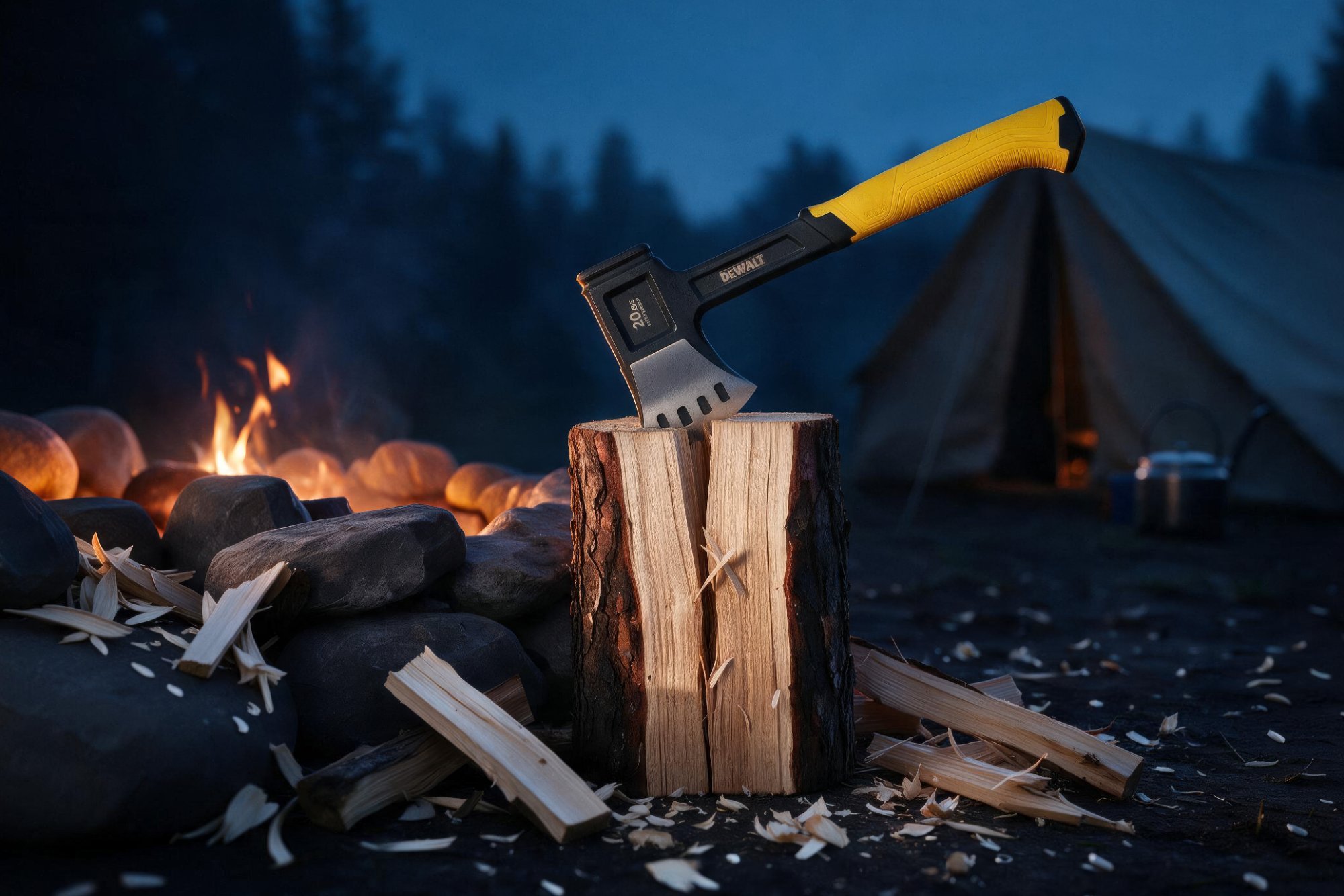
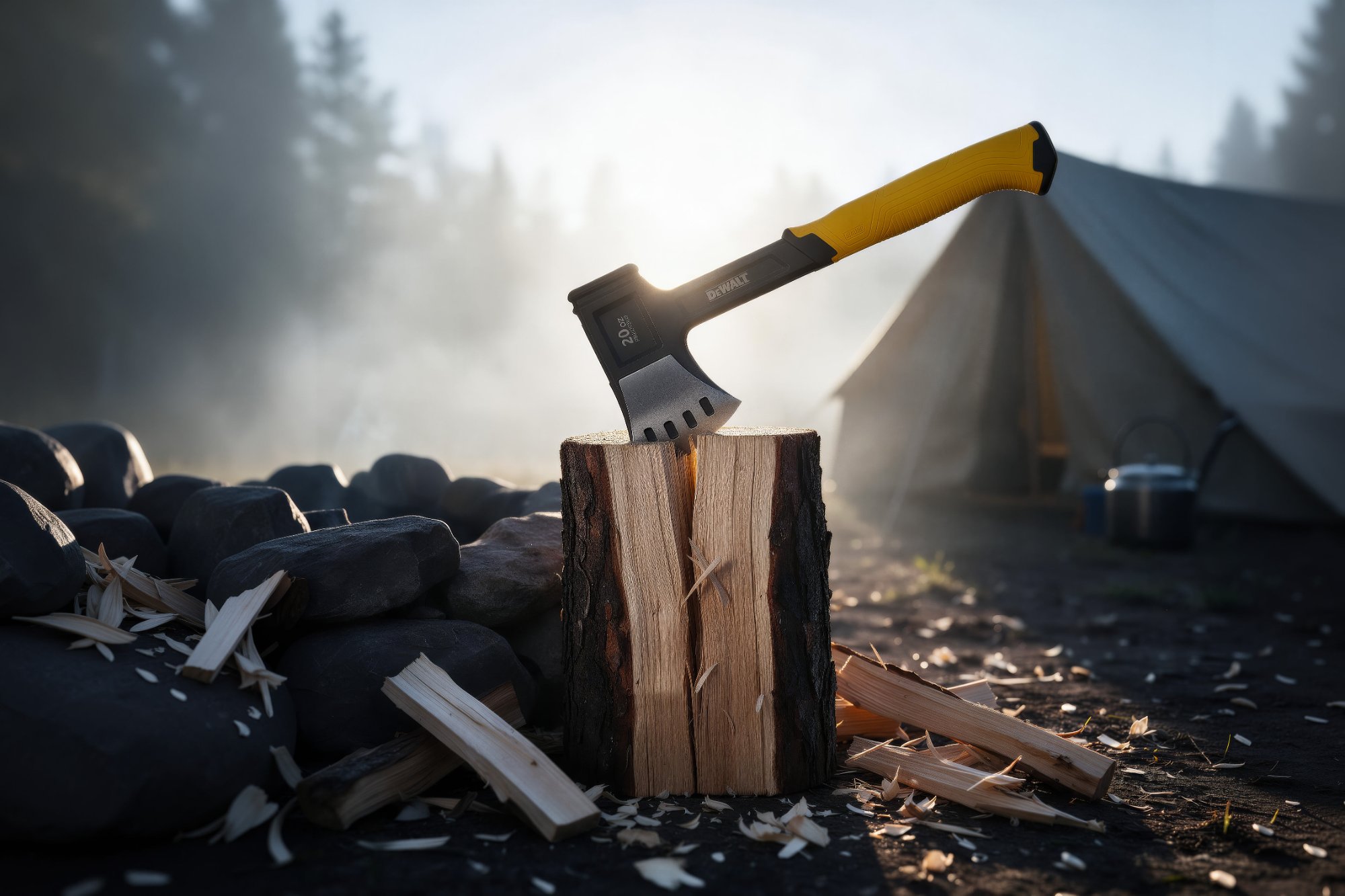
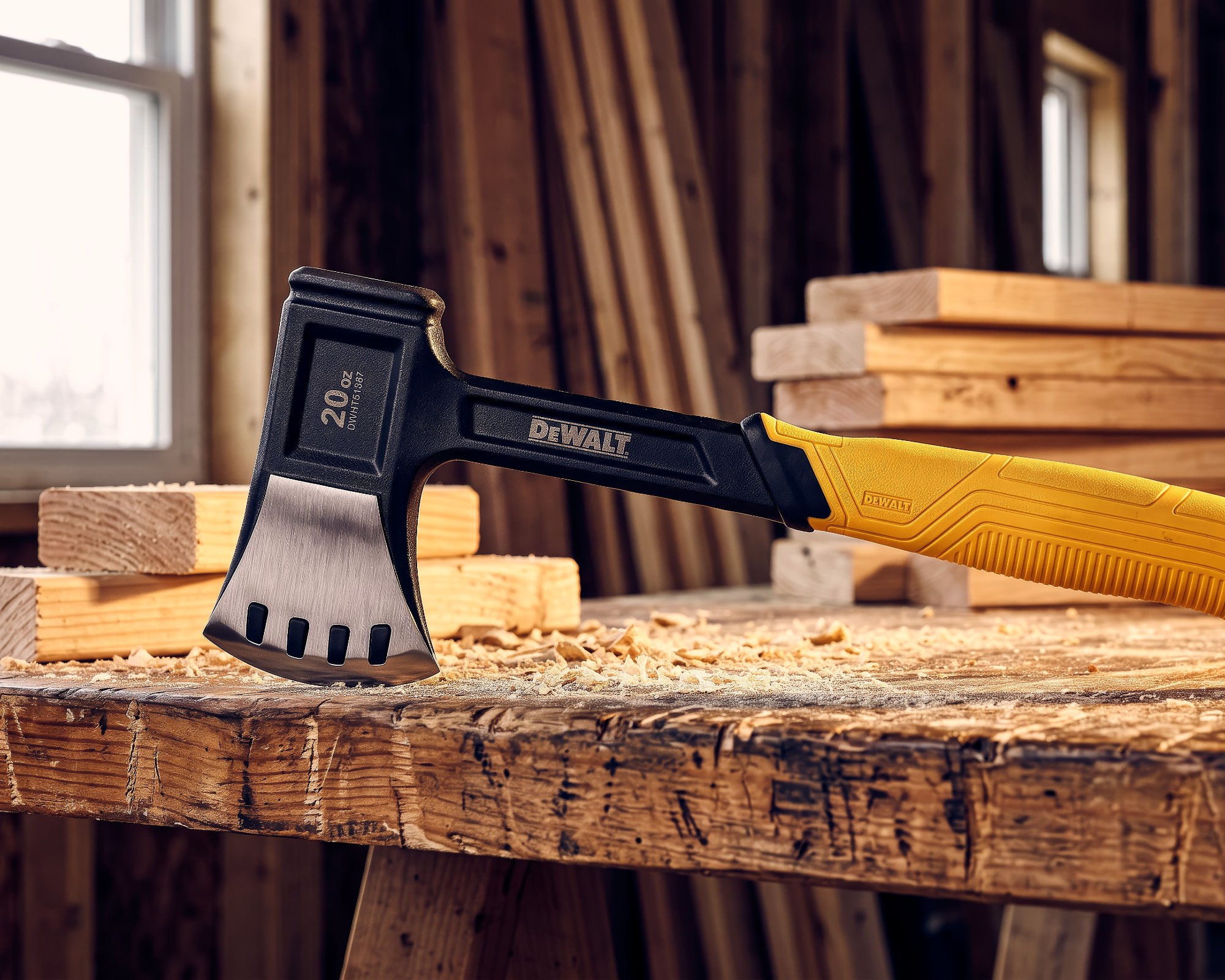
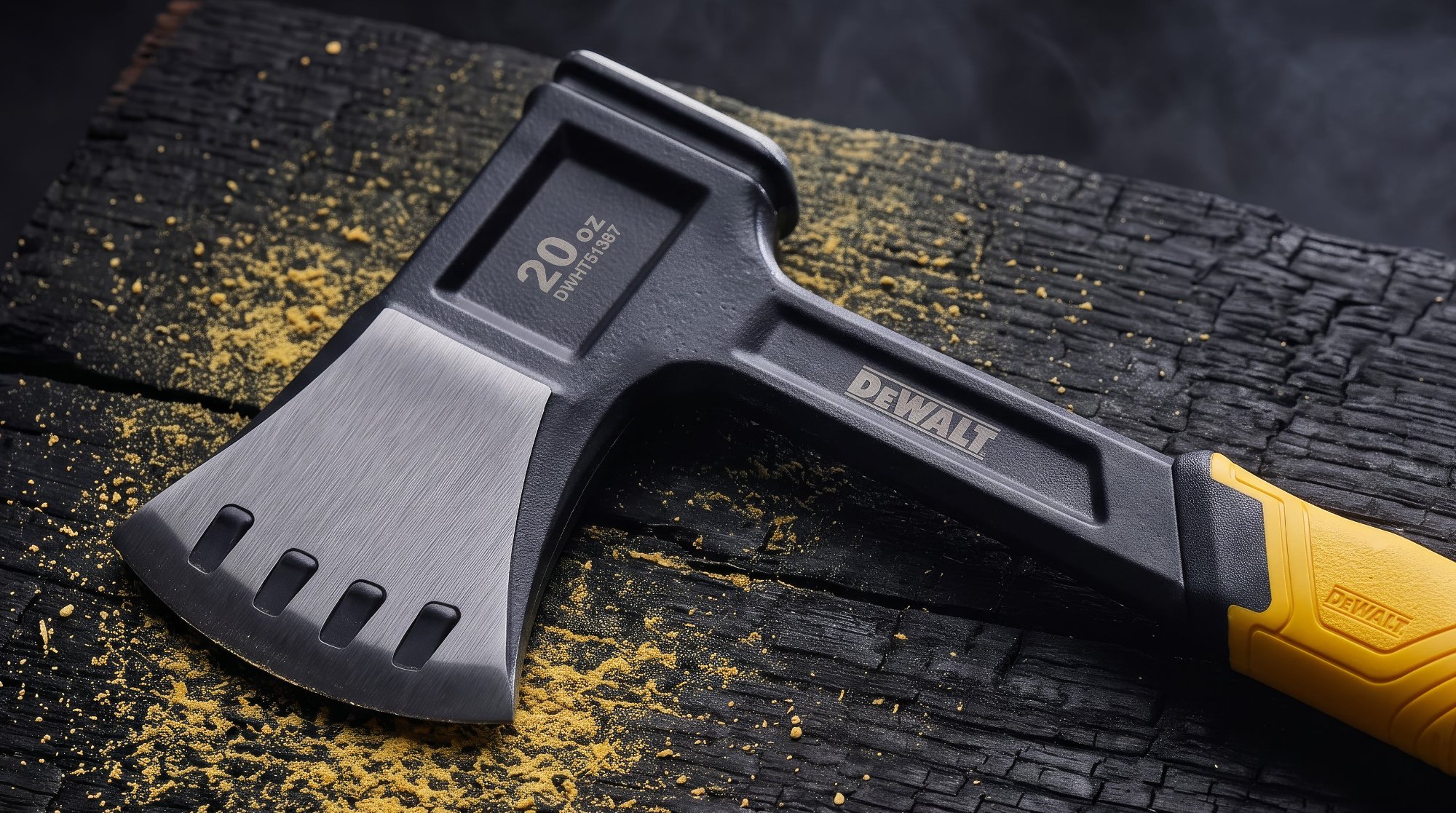
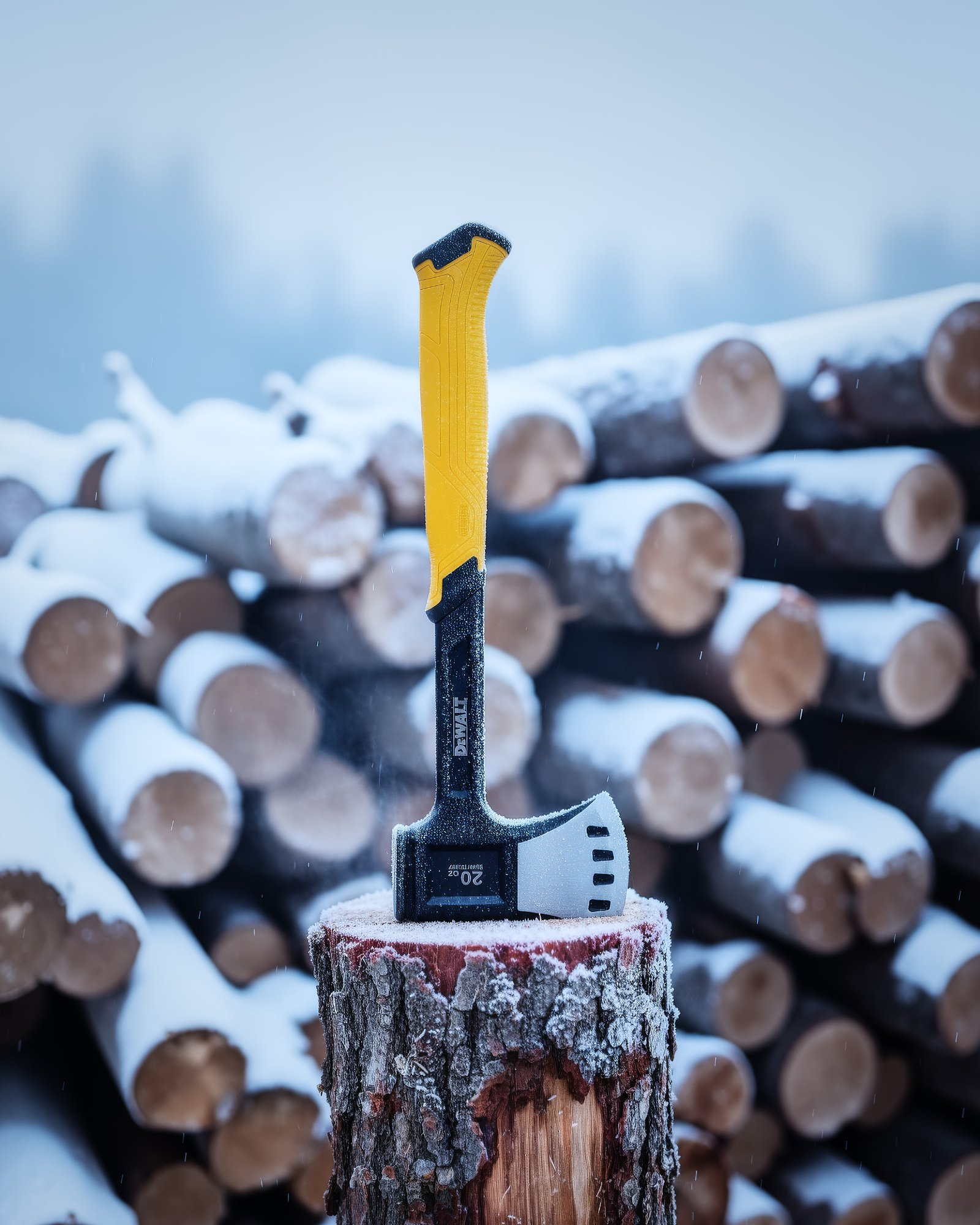
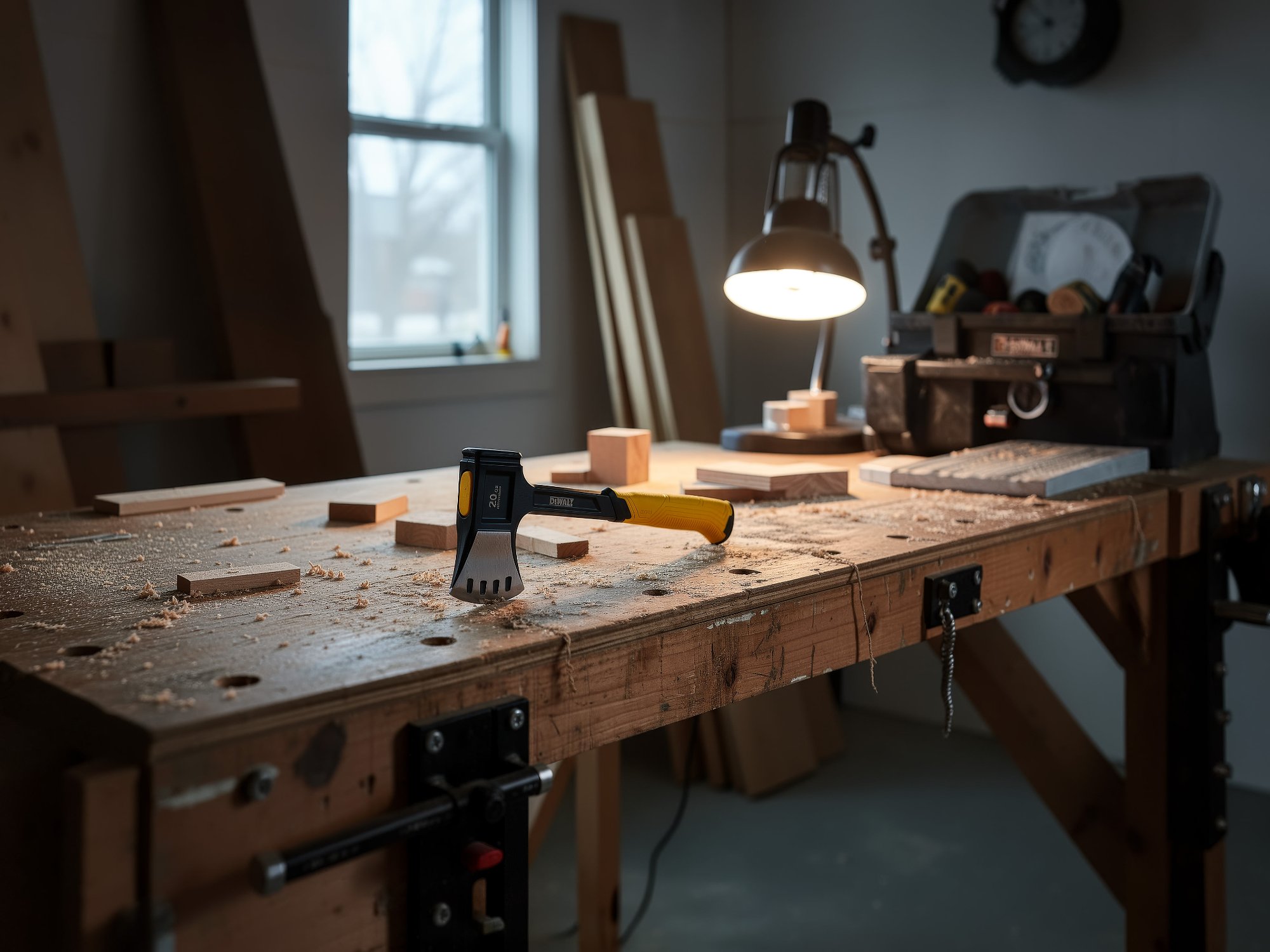
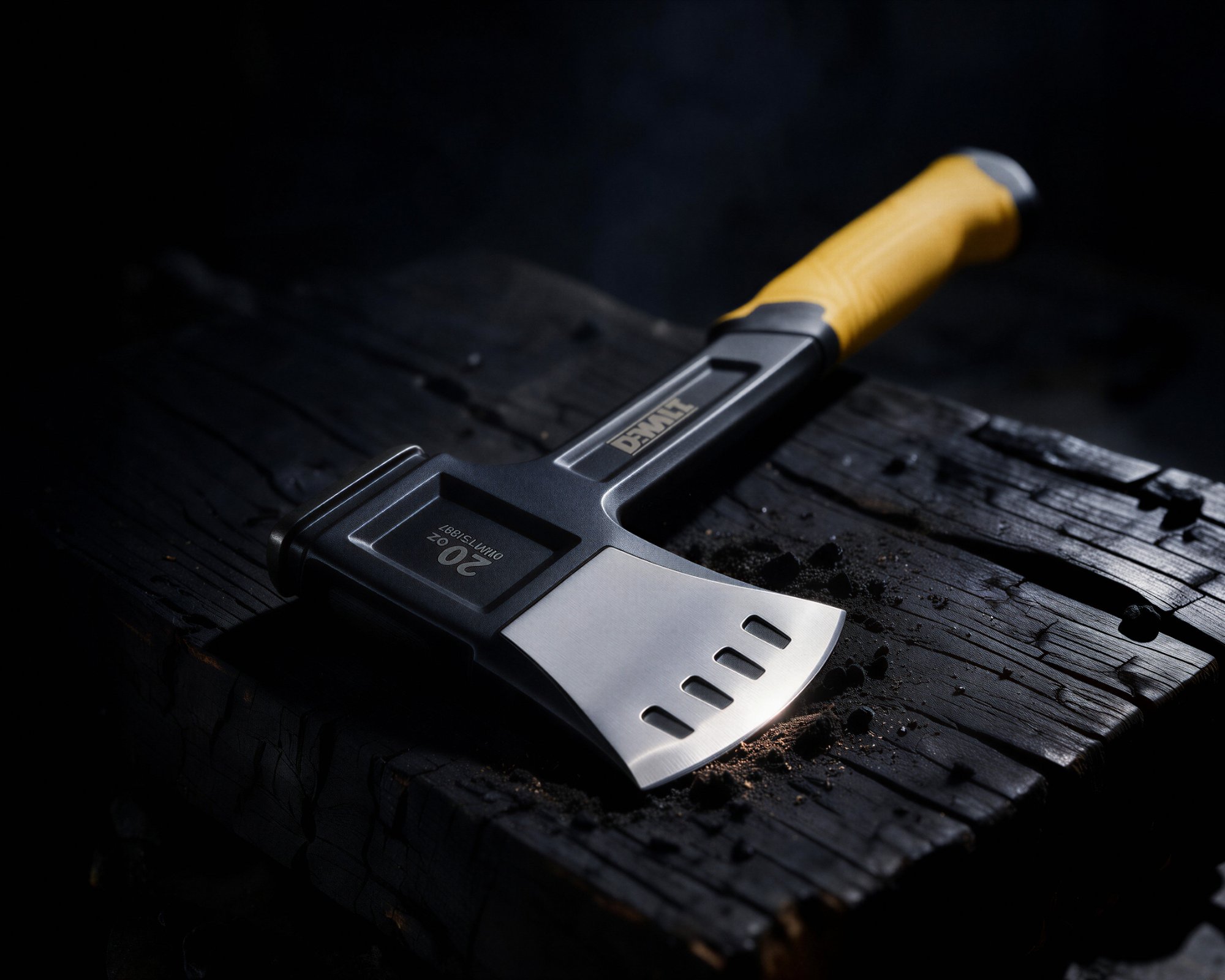
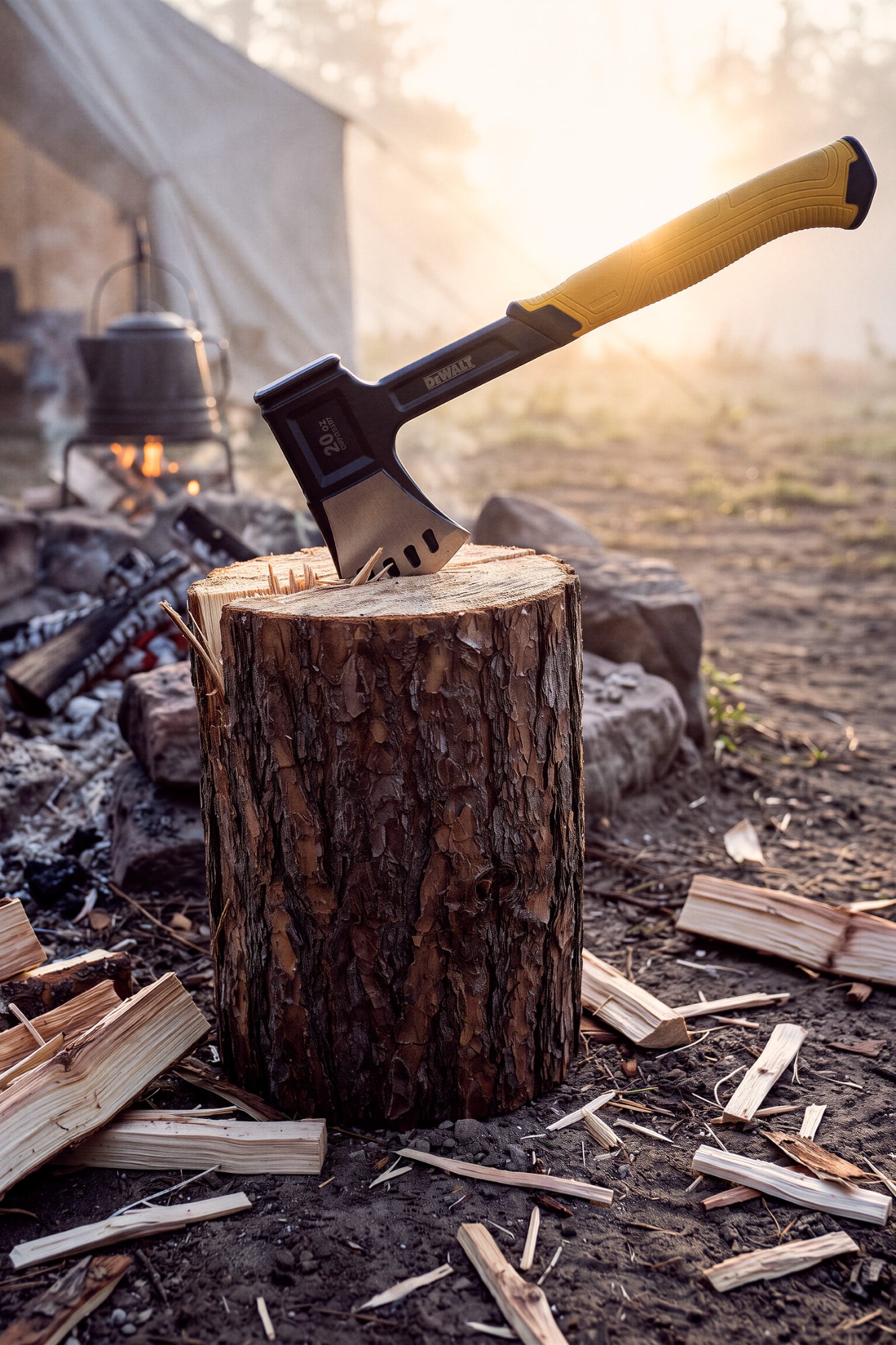
From there, the AI's job was environments. Campsite at dusk, fire going. Same campsite at sunrise. Because the scenes matched, I could build a sunrise-to-sunset time-lapse of the hatchet in the same log — a video deliverable out of a stills shoot. Eight looks total: macro, medium, wide. A full asset library from one afternoon of photography. The hatchet never left the table. The branding, color, and scale were right in every frame, because every frame started from the real thing.
Same log, same campsite — dusk and sunrise. Matched scenes made the time-lapse possible: a video deliverable out of a stills shoot.
From stills to motion — a 15-second video composite built entirely from the same still library.
Scale, after accuracy
I'm not going to pretend the generation side isn't remarkable. Once the element exists, I can place that product in any environment, from any angle, and I'd be hard-pressed to spot the fake if I hadn't built it myself. The workflows save. Six months later, when a client needs the product in five new settings, the shoot doesn't happen again — the library just grows.
That's the honest pitch: one proper capture session buys near-infinite scale on top of it.
And the honest limits: video is where product work still struggles. A static scene — hatchet in a log, campfire behind it — generates cleanly. A person walking in, grabbing it, and swinging it believably? Not yet. Anyone telling you otherwise hasn't tried it on a real product.
The "just shoot it on your kitchen table with your phone" advice floating around? True — right up until the product is brand-critical or needs to scale past one image. Then it falls apart at exactly the moment it matters.
Six of the eight looks — workshop, macro, winter, and more. Every one built from the same afternoon's plates.
Accuracy at scale is the whole product
The most valuable thing I can offer a brand right now isn't AI and it isn't photography. It's accuracy at scale — generations that are correct on brand, color, copy, and proportion, every time, because they started from a photograph. Almost nobody is doing that. Almost nobody is even talking about it.
The robot's good. It just hasn't held the hatchet.
Let's talk through what a photograph-first workflow looks like for your brand.
Mark Bowers is a commercial product photographer based in Austin, TX, working with consumer-goods brands and agencies on catalog, e-commerce, and campaign imagery. He operates as Thunderbolt Commercial Photography, LLC — shooting product stories built to move units.